Now Reading: Best Avocado Toast (Crispy, Creamy & Packed with Flavor)
-
01
Best Avocado Toast (Crispy, Creamy & Packed with Flavor)

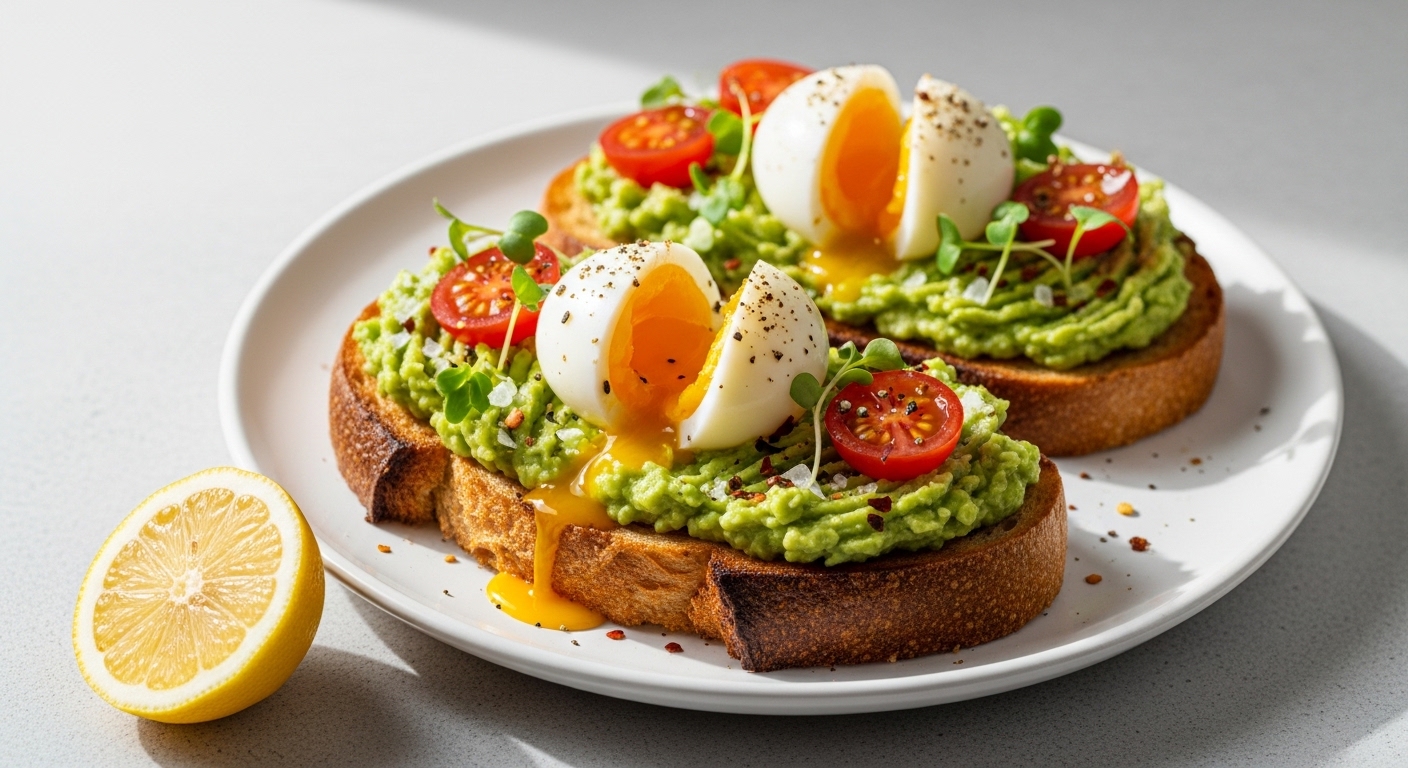
Make the Best Avocado Toast with crispy bread, creamy ripe avocado, and bold seasoning for a fresh, flavor-packed breakfast or snack.
Introduction
Soggy avocado toast is everywhere — and most people pretend that’s just how it is. It’s not. When your bread turns limp, and your avocado tastes flat, that’s not trendy minimalism — that’s bad technique.
You toast the bread. You mash the avocado. You sprinkle salt. And somehow it still feels boring, watery, or weirdly bland. Ever wonder why café avocado toast tastes better than yours? It’s not magic. It’s a method.
This Best Avocado Toast solves the crunch, seasoning, and texture problems in one go. You’ll get shatter-crisp bread, creamy avocado with actual flavor, and balanced toppings that hit salty, bright, and rich at once.
And yes — the order you build it matters more than you think. Let’s do it right.
Quick Answer
The Best Avocado Toast starts with deeply toasted bread at 400°F (200°C), topped with properly seasoned mashed avocado and finished with acid, salt, and texture. Crisp base, creamy center, balanced toppings. Control moisture and layer flavor. That’s the whole difference between soggy toast and café-quality results.
Why You’ll Love This Recipe
- Real Crunch That Lasts — The bread is toasted hard enough to stay crisp under avocado, so it doesn’t collapse after two minutes. That structure changes everything.
- Bold, Balanced Flavor — Lemon juice, flaky salt, and olive oil wake up the avocado, preventing it from tasting dull. You actually taste layers, not just green mush.
- Customizable but Stable — The base method works with eggs, tomatoes, or chili flakes without getting messy. It’s built to hold toppings without turning soggy halfway through eating.
Ingredients List
Dry Ingredients
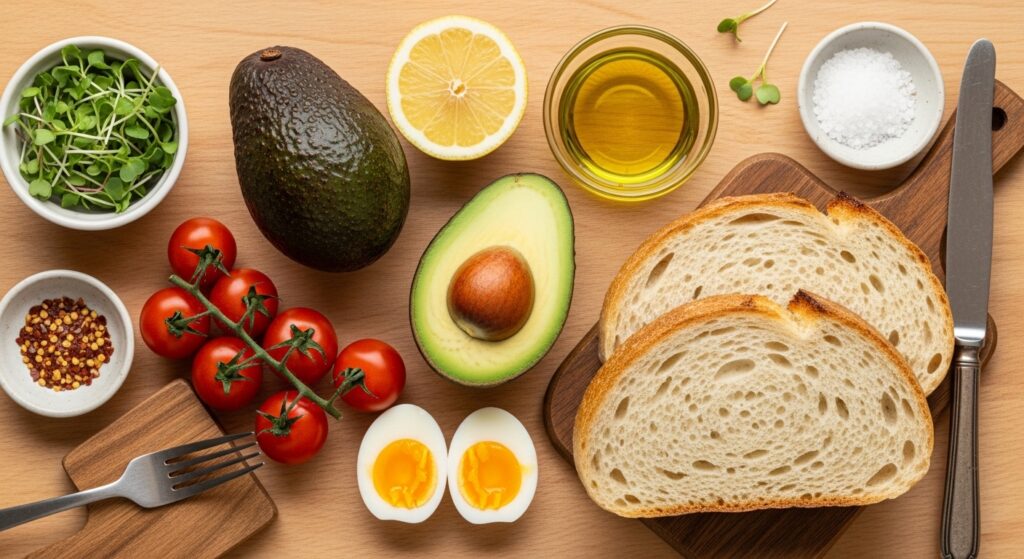
Flaky sea salt — ½ teaspoon (3 g)
Fresh cracked black pepper — ¼ teaspoon (1 g)
Red pepper flakes — ¼ teaspoon (optional)
Wet Ingredients
Ripe avocado — 1 large (about 200 g flesh)
Fresh lemon juice — 2 teaspoons (10 ml)
Extra-virgin olive oil — 1 tablespoon (15 ml)
Toppings / Optional Add-ins
Sourdough bread — 2 thick slices (about 1 inch / 2.5 cm thick)
Cherry tomatoes — ¼ cup (40 g), halved
Soft-boiled egg — 1
Microgreens — small handful
Simple ingredients — but the handling makes or breaks it.
Ingredient Notes & Smart Swaps
Avocado: It should yield slightly when pressed but not collapse. Overripe avocado turns watery and grainy — underripe won’t mash smoothly and tastes grassy.
Bread: Thick-cut sourdough works best because its structure supports moisture. Soft sandwich bread sounds convenient, but it compresses under weight and ruins texture fast.
Lemon Juice: Don’t skip it. Acid doesn’t just prevent browning — it sharpens flavor and keeps the avocado from tasting heavy.
Olive Oil: Use good olive oil. A peppery, fresh oil adds depth; bland oil disappears and wastes the step.
Swap Option: Gluten-free bread works fine if it’s sturdy and toasted thoroughly. Toast it slightly longer than wheat bread — gluten-free slices often hold more surface moisture.
Step-by-Step Instructions
- Preheat your oven to 400°F (200°C). Lay bread directly on the rack or a sheet pan and toast for 8–10 minutes until deep golden and firm to the touch. You’re looking for a crust that sounds hollow when tapped. (Pro Tip: Toast slightly darker than you think — it softens under toppings.)
- While the bread toasts, slice the avocado and scoop it into a bowl. Mash with a fork just until mostly smooth but still slightly chunky — completely smooth paste kills texture.
- Add lemon juice, half the salt, and olive oil to the avocado. Stir gently until glossy and creamy, tasting as you go. It should taste slightly brighter than you want because it mellows once spread.
- Remove the bread from the oven and let it cool for exactly 1 minute — no longer. (Warning: Spreading avocado on piping hot bread creates steam and sogginess underneath.)
- Spread avocado generously, edge to edge. You want about ½ inch thickness — thin spreads feel skimpy and dry.
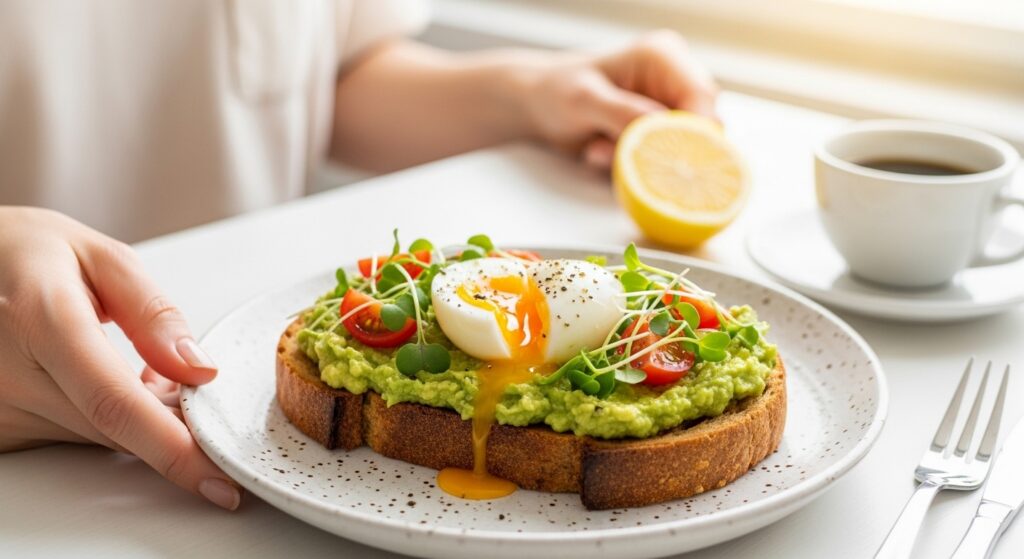
- Finish with remaining salt, cracked pepper, and optional toppings. If adding egg, slice it while warm so the yolk runs slightly into the avocado — that richness blends beautifully. (Pro Tip: Add tomatoes last to avoid extra moisture soaking the toast.)
Pro Tips for Perfect Results
Toast Harder Than You Think — Pale toast equals soggy toast. A darker, crisp surface resists moisture longer, improving contrast.
Season in Two Stages — Salt inside the mash and on top after spreading. It creates layered flavor instead of surface-only seasoning.
Build Just Before Eating — Even great toast softens over time. Assemble within 3–4 minutes of serving for maximum crunch.
Common Mistakes to Avoid
Using Warm Bread Immediately — Steam gets trapped under the avocado, making the base wet. Let it cool briefly first.
Over-Mashing the Avocado — Smooth puree feels heavy and baby-food-like. Leave small chunks for texture and better mouthfeel.
Under-Seasoning — Avocado needs salt more than you think. Taste and adjust before spreading.
Variations & Substitutions
Protein Boost: Add smoked salmon or a poached egg. Protein balances fat and makes it more filling.
Spicy Kick: Mix chili oil into the avocado. Fat carries spice beautifully, so heat feels rounded instead of sharp.
Vegan High-Protein Option: Add mashed white beans under avocado. Beans add structure and protein without overpowering flavor.
What to Serve With It
Pair with a soft-boiled egg for richness. Serve alongside fresh fruit for brightness. A crisp arugula salad tossed in lemon vinaigrette cuts right through the creaminess and balances every bite. Coffee works great. So does fresh orange juice. Ideal for brunch spreads or quick weekday breakfasts.
Storage & Reheating Instructions
Avocado toast doesn’t store assembled — it gets soggy fast. Store mashed avocado separately in an airtight container with plastic wrap pressed directly on the surface for up to 24 hours.
Freeze bread slices ahead of time and toast them straight from the freezer.
Unusual hack: If avocado darkens slightly, stir in ½ teaspoon warm water and whisk briefly — it restores creamy texture without thinning flavor.
Nutrition Facts (per serving)
| Calories | 320 |
| Protein | 8 g |
| Carbohydrates | 28 g |
| Fats | 22 g |
| Fiber | 9 g |
| Sodium | 350 mg |
| Key Vitamins/Minerals | Potassium, Vitamin E, Folate |
FAQs
Why does my avocado toast get soggy?
Usually, because the bread isn’t toasted deeply enough, or the avocado is spread on hot toast. Steam creates trapped moisture underneath. Let the toast cool slightly, then build it right before eating for the best texture.
Can I make avocado toast ahead of time?
You can prep components, but assemble just before serving. Mashed avocado keeps for 24 hours if sealed tightly with plastic wrap, with the wrap touching its surface to prevent oxidation.
What bread works best?
Thick sourdough is ideal because its structure holds moisture. Thin sandwich bread collapses quickly and turns soft within minutes.
How do I keep avocado from browning?
Add lemon juice and press wrap directly onto the surface. Oxygen causes browning, so reducing air contact slows discoloration dramatically.
Is avocado toast healthy?
Yes, in moderation. It’s high in healthy fats and fiber, which help keep you full longer and stabilize energy levels.
Conclusion
Crispy base. Creamy center. Balanced seasoning. That’s the formula. Toasting at 400°F (200°C) and letting it cool one minute before spreading makes a bigger difference than most toppings ever will.
Try it exactly once this way — no shortcuts — and notice how the texture holds. Then experiment. Add egg, chili oil, or keep it clean and classic.
Make it. Taste it. Adjust it. And if this changed your avocado toast game, share it with someone still eating soggy bread.