Now Reading: Classic Beef Wellington Recipe (Crispy Puff Pastry & Perfectly Juicy Center)
-
01
Classic Beef Wellington Recipe (Crispy Puff Pastry & Perfectly Juicy Center)
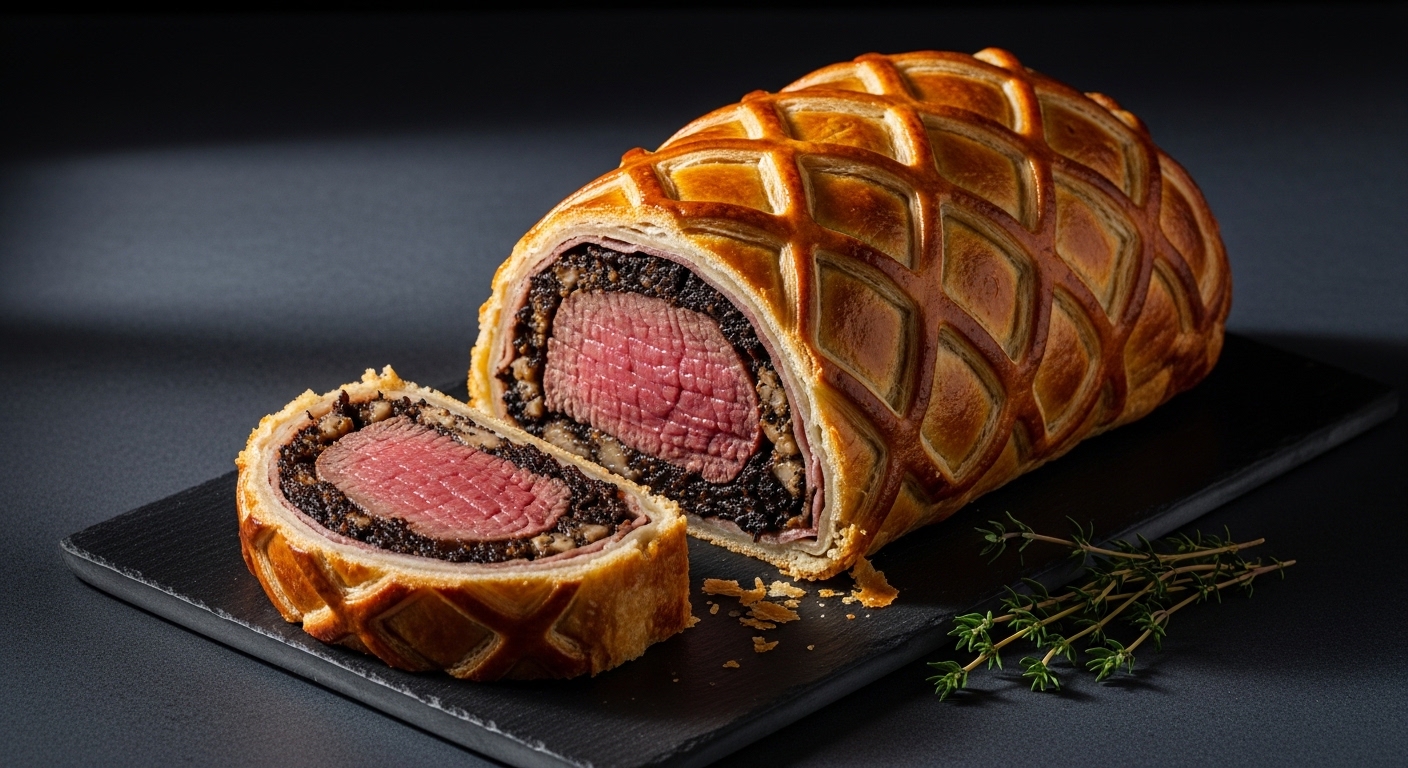

Master the Classic Beef Wellington Recipe with crisp puff pastry and a perfectly juicy center, using precise techniques and bold flavor layering.
Introduction
Soggy bottoms and gray beef have ruined more dinners than anyone admits — and most recipes pretend it’s “just a tricky dish.” It’s not tricky. It’s mishandled. A proper Classic Beef Wellington Recipe shouldn’t leak juices into the pastry or overcook the tenderloin into expensive regret.
You seared it. You wrapped it. You baked it. Then you sliced in — and the pastry slid off while the beef sat overdone and dry. That’s frustrating. That’s avoidable.
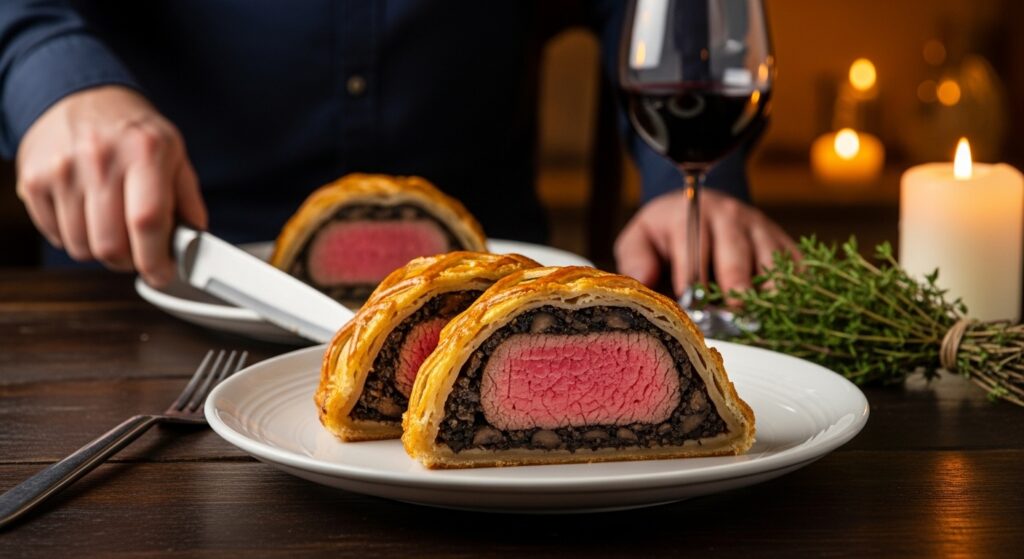
This recipe fixes the weak points: moisture control, tight wrapping, correct chill time, and precise internal temperature. You’ll get shatter-crisp puff pastry, deeply savory mushroom duxelles, and a blushing pink center that actually stays juicy. Yes, timing matters. Yes, resting matters more.
Ready to nail the showpiece instead of gambling with it?
Quick Answer
The Classic Beef Wellington Recipe layers seared beef tenderloin with mushroom duxelles and prosciutto, then wraps it tightly in puff pastry. Chill before baking and cook to 125°F (52°C) for medium-rare. Rest properly so juices redistribute. The result is a crisp pastry exterior and a perfectly juicy center.
Why You’ll Love This Recipe
- Crisp, Not Soggy Pastry — Moisture is controlled at every stage, from reducing the mushrooms fully to chilling the wrapped beef before baking. That keeps the puff pastry flaky and golden, rather than limp underneath.
- Perfectly Juicy Center — We cook by internal temperature, not guesswork, so your tenderloin stays pink and tender. Resting locks juices inside the meat where they belong.
- Deep, Layered Flavor — Properly seasoned beef, concentrated mushroom duxelles, and salty prosciutto create contrast in every slice. Each layer has a purpose — nothing is decorative filler.
Ingredients List
Dry Ingredients
Kosher salt — 2 teaspoons (10 g)
Freshly ground black pepper — 1 teaspoon (3 g)
All-purpose flour (for dusting) — 2 tablespoons (15 g)
Wet Ingredients
Center-cut beef tenderloin (2–2½ lb) — 1 whole (900 g–1.1 kg)
Olive oil — 2 tablespoons (30 ml)
Dijon mustard — 2 tablespoons (30 ml)
Egg yolks — 2
Toppings / Fillings
Cremini mushrooms — 1 lb (450 g), finely chopped
Shallots — 2 small (about 60 g), minced
Fresh thyme leaves — 1 teaspoon (1 g)
Prosciutto slices — 8–10 thin pieces
Puff pastry sheets — 1 lb (450 g), thawed
Each component earns its spot — skip one and the balance shifts.
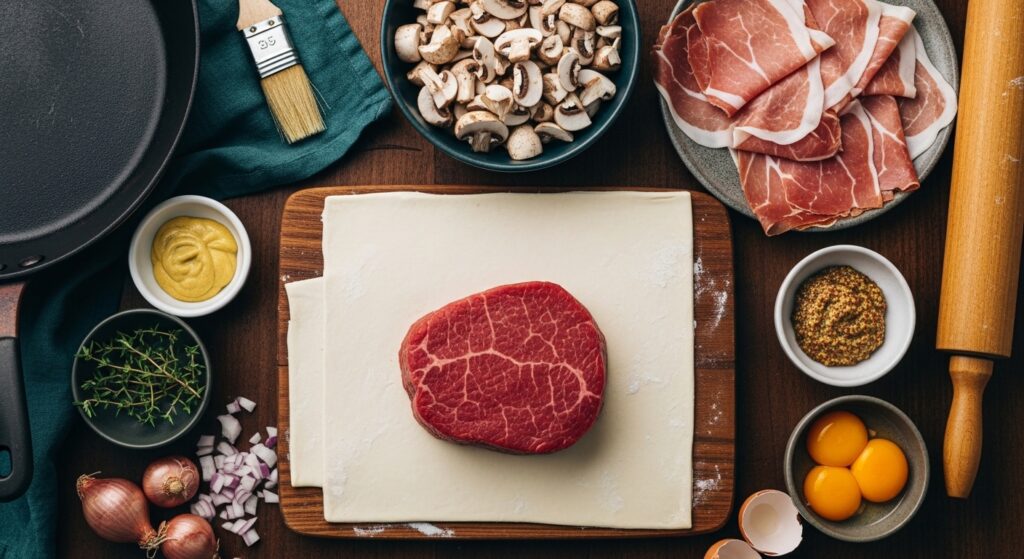
Ingredient Notes & Smart Swaps
Beef Tenderloin: Use center-cut for even thickness. Tapered ends cook faster and throw off doneness — trim or tuck them under for uniform shape.
Mushrooms: Finely chop or pulse in a processor, but don’t puree. Texture matters; a paste traps steam, while finely chopped mushrooms cook down dry and concentrated.
Prosciutto: It creates a moisture barrier between the beef and the pastry. Skip it, and juices seep into the crust — that’s science, not opinion.
Puff Pastry: All-butter pastry delivers better flavor and browning. Cheaper versions contain more water, which increases the risk of sogginess during baking.
Swap Option: For a gluten-free approach, wrap the beef in thin crepes made from gluten-free flour before pastry. The crepe absorbs moisture and protects the structure surprisingly well.
Step-by-Step Instructions
- Pat the beef completely dry. Season generously with salt and pepper, pressing it in so it adheres.
- Heat a heavy skillet over high heat until lightly smoking. Add oil, then sear beef 45–60 seconds per side until deeply browned — not gray. (Pro Tip: Don’t move it too soon; crust forms when it releases naturally.)
- Remove the beef and brush it immediately with Dijon while it’s still warm. The mustard melts into the surface and builds flavor without overpowering. Cool fully.
- In the same pan, cook mushrooms and shallots over medium heat. Stir constantly until all moisture evaporates and the mixture looks dry and paste-like — about 12–15 minutes. (Warning: If it looks glossy or wet, keep cooking.) Add thyme and cool completely.
- Lay plastic wrap on the counter. Overlap prosciutto into a rectangle, spread the mushroom mixture evenly, then place beef on top. Roll tightly using the plastic to form a firm log — twist ends to secure. Chill 30 minutes at 38°F (3°C).
- Roll puff pastry on a floured surface. Remove plastic from the beef and place it centered. Wrap snugly, sealing seams underneath. Chill for 20 minutes. (Pro Tip: Cold pastry puffs better.)
- Brush with egg yolk. Score lightly — don’t cut through. Bake at 400°F (200°C) for 40–45 minutes, until the internal temperature reaches 125°F (52°C).
- Rest 15 minutes before slicing. The juices settle, and the pastry firms for clean cuts.
Pro Tips for Perfect Results
Chill Between Steps — Cold layers prevent steam buildup and keep pastry flaky. I never skip the second chill; it changes everything.
Use a Thermometer — Guessing doneness ruins expensive beef. Pull at 125°F (52°C) for medium-rare because carryover heat will raise it another 5 degrees.
Dry the Mushrooms Completely — This feels tedious, but it’s critical. If moisture remains, the bottom crust becomes soft rather than crisp.
Common Mistakes to Avoid
Undercooking Mushrooms — Excess moisture leaks into the pastry. Cook until dry and concentrated.
Skipping Rest Time — Cutting too early releases juices onto the board. Resting redistributes moisture evenly inside.
Overbaking “Just in Case” — Fear leads to dry beef. Use temperature, not time alone.
Variations & Substitutions
Spinach Layer Addition: Add sautéed spinach, squeezed completely dry. It works because removing moisture prevents sogginess while adding earthy contrast.
Blue Cheese Twist: Spread a thin layer of blue cheese over mushrooms. The sharpness cuts richness and enhances beef flavor by balancing fat.
Vegetarian Wellington: Replace beef with roasted whole butternut squash. Its dense texture mimics structure, and mushroom duxelles still provide umami depth.
What to Serve With It
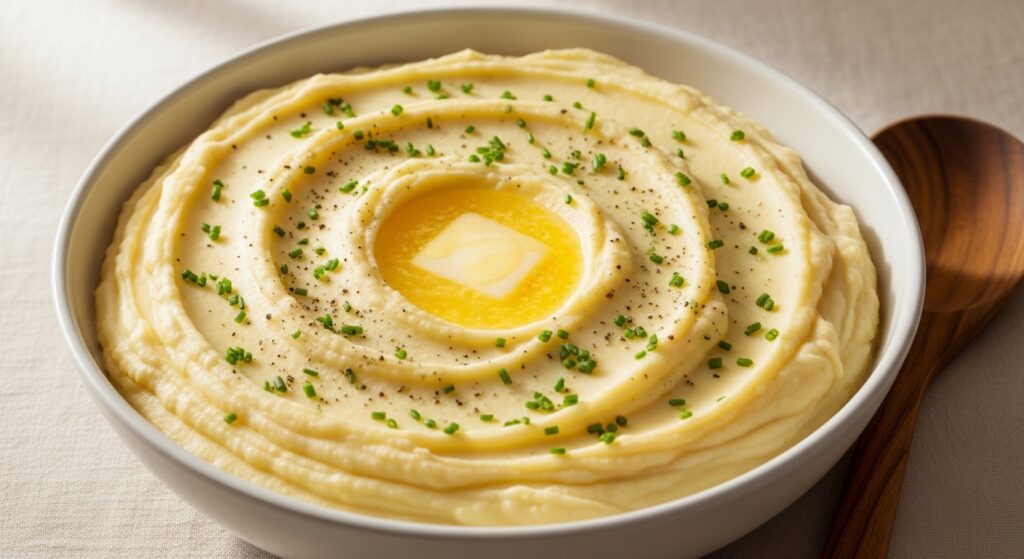
Serve with creamy mashed potatoes to catch juices. Roasted asparagus adds brightness and crunch. A simple arugula salad cuts richness. Pair with dry red wine, such as Cabernet Sauvignon, or sparkling water with lemon. Ideal for holiday dinners or milestone celebrations.
Storage & Reheating Instructions
Store leftovers tightly wrapped in the refrigerator for up to 3 days. Place a paper towel beneath slices to absorb excess moisture — that keeps pastry from softening.
Freeze individual slices wrapped in parchment and foil for up to 1 month.
To reheat, use a 300°F (150°C) oven for 12–15 minutes. Avoid microwaves — they steam the pastry.
Nutrition Facts (per serving)
| Calories | 620 |
| Protein | 38 g |
| Carbohydrates | 28 g |
| Fats | 42 g |
| Fiber | 2 g |
| Sodium | 680 mg |
| Key Vitamins/Minerals | Iron, Zinc, Vitamin B12 |
FAQs
How do I keep Beef Wellington from getting soggy?
Dry mushrooms thoroughly and chill wrapped beef before baking. Moisture control is everything. Prosciutto acts as a barrier, reducing the amount of steam that comes into contact with the pastry.
Can I prepare Beef Wellington ahead of time?
Yes. Assemble fully and refrigerate up to 24 hours before baking. Bake directly from the chilled state for the best structure and puff.
What internal temperature is ideal?
125°F (52°C) for medium-rare. Carryover cooking raises the temperature slightly during resting, ensuring juicy results.
Why must it rest before slicing?
Resting allows juices to redistribute inside the meat fibers. Cutting early releases moisture, leaving the beef dry.
Can I use a different cut of beef?
Tenderloin works best because it’s uniform and lean. Other cuts vary in thickness and fat, leading to uneven cooking.
Conclusion
Crisp pastry. Juicy center. Deep, savory layers. That’s what this Classic Beef Wellington Recipe delivers when you respect moisture control and internal temperature.
You’ve got the steps. You’ve got the timing. Now execute it with confidence.
Slice cleanly after resting, and watch that pink center hold its juices rather than flooding the board. When you serve it, notice the crust shatter under the knife — that sound tells you everything worked.
Try it for your next big dinner and share your results. Ready to master another classic?