Now Reading: Best Creamy Cucumber Salad Recipe (Fresh, Crunchy & Ready in 10 Minutes)
-
01
Best Creamy Cucumber Salad Recipe (Fresh, Crunchy & Ready in 10 Minutes)

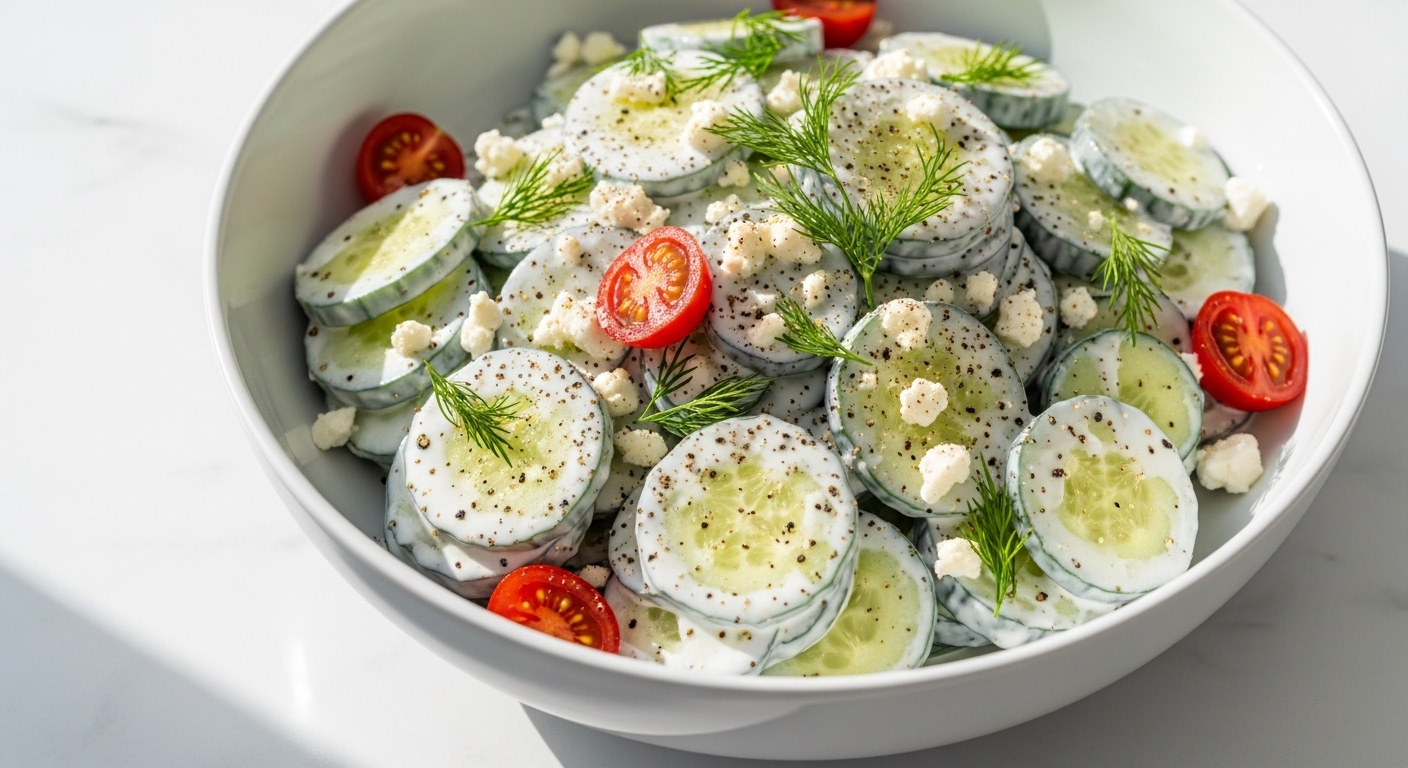
Make the best creamy cucumber salad recipe in just 10 minutes — fresh, crunchy, and loaded with bold flavor. No soggy cucumbers, ever again.
Introduction
Most cucumber salads are watery, bland disasters — and the dressing slides right off before it ever reaches your fork. You made it, chilled it, and pulled out a bowl of pale, soggy slices swimming in diluted dressing. That’s not a salad. That’s a disappointment with garnish.
You salted the cucumbers. You waited. You mixed everything carefully — and it still turned watery within the hour. That’s not your technique failing. That’s a recipe that never told you the most important step.
This creamy cucumber salad recipe fixes that completely. It pulls out excess moisture before it ruins the texture, builds a dressing that clings and coats, and stays crisp and bold for hours — not minutes. Ten minutes of prep. Zero soggy regrets.
Quick Answer
The best creamy cucumber salad combines thinly sliced cucumbers, salted and drained to remove excess moisture, with a tangy dressing made from sour cream, vinegar, dill, and garlic. Mix, chill for 15 minutes, and serve cold. The result is a crisp, creamy cucumber salad that holds its texture and flavour without turning watery.
Why You’ll Love This Recipe
- It stays crisp for hours — not minutes. Salting and draining the cucumbers before dressing removes the water that ruins texture, so the salad holds its crunch long after it hits the table.
- The dressing coats every slice instead of pooling at the bottom. Sour cream creates a thick, clinging base that wraps around each cucumber slice rather than sliding off into a watery puddle beneath them.
- It’s ready in 10 minutes with zero cooking involved. No heat, no equipment beyond a bowl and a knife — just prep, mix, and chill while you finish the rest of the meal.
Ingredients List
Produce:
- English cucumbers — 2 large (about 600 g), thinly sliced
- Fresh dill — 3 tablespoons (10 g), chopped
- Garlic cloves — 2 small, finely minced
- Red onion — ¼ small (30 g), thinly sliced
Dressing Ingredients:
- Sour cream — ½ cup (120 g)
- White wine vinegar — 2 tablespoons (30 ml)
- Granulated sugar — 1 teaspoon (4 g)
- Salt — 1 teaspoon (6 g), for salting cucumbers
- Black pepper — ¼ teaspoon (1 g), freshly cracked
Optional Toppings:
- Cherry tomatoes — halved, for color
- Feta cheese crumbles — 2 tablespoons (20 g)
- Extra dill sprigs — for garnish
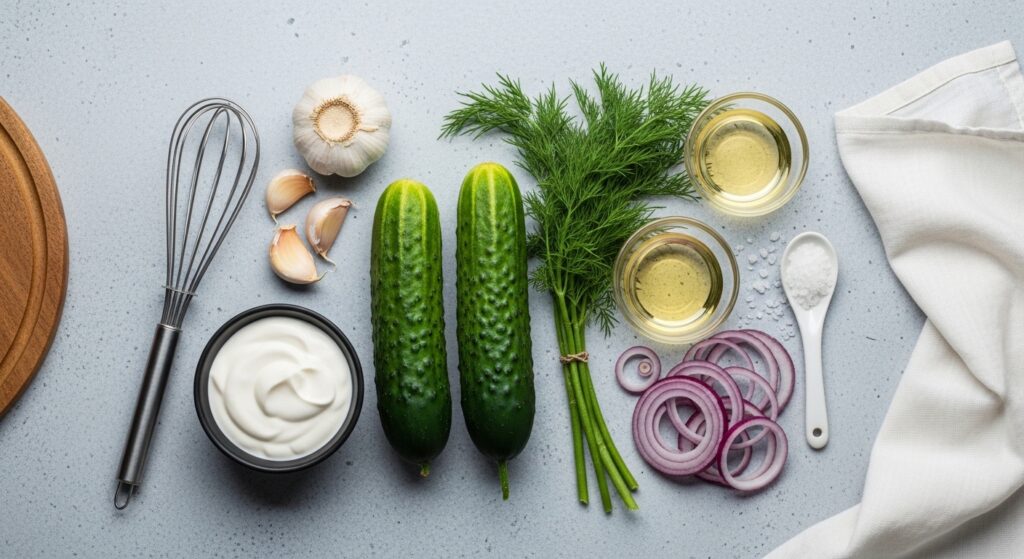
These ingredients are straightforward — but the order you use them changes everything about the final texture.
Ingredient Notes & Smart Swap
Cucumbers: English cucumbers work best here because their skin is thin and their seed cavity is smaller — less water, more crunch per slice. Regular cucumbers can work, but peel them first and scoop out the seeds with a spoon before slicing.
Sour Cream: Full-fat sour cream creates the thickest, most stable dressing — low-fat versions release water as they sit and thin the dressing within minutes. Greek yogurt is the best direct swap — it’s tangier and slightly thicker, which actually improves the cling.
Fresh Dill: Dried dill works in a pinch — use 1 teaspoon (2 g) instead of 3 tablespoons fresh. But fresh dill releases oils that dried simply can’t replicate — the flavour difference is dramatic enough to notice in the first bite.
White Wine Vinegar: Apple cider vinegar is the closest swap — same acidity level, slightly fruitier finish. Avoid plain white vinegar — it’s too sharp and flattens the other flavours instead of brightening them.
Step-by-Step Instructions
- Salt the cucumbers. Place sliced cucumbers in a colander, sprinkle with 1 teaspoon of salt, toss to coat, and let them sit for 10 minutes. You’ll see water beading on the surface and dripping through — that’s exactly what you want removed. (Pro Tip: Press the cucumbers gently with a clean towel after draining — this removes an extra layer of moisture that salting alone misses.)
- Make the dressing. Whisk together sour cream, white wine vinegar, sugar, minced garlic, and cracked black pepper in a large bowl until smooth and uniform. The dressing should look thick and pale — almost like a loose tzatziki — and smell tangy with a sharp garlic note underneath.
- Combine everything. Pat the drained cucumbers dry with a paper towel — they should feel slightly tacky, not wet. Add cucumbers, red onion, and fresh dill to the dressing bowl. (Warning: Never add wet cucumbers directly to the dressing — residual surface water immediately thins the dressing and ruins the texture you just worked to protect.)
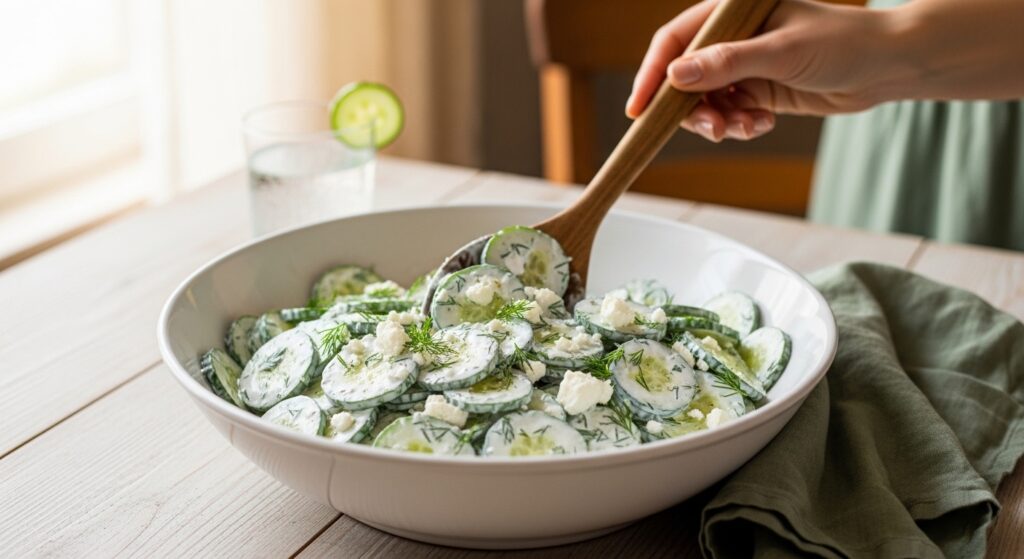
- Toss until fully coated. Fold the cucumbers through the dressing using a large spoon — don’t stir aggressively or the cucumbers will bruise and release more liquid. Every slice should look glossy and evenly coated, with visible dill clinging to the surface. (Pro Tip: Add red onion last and fold gently — overworked onion releases a sharp, bitter compound that overpowers the dill.)
- Chill before serving. Cover the bowl and refrigerate for 15 minutes minimum. The dressing thickens slightly as it chills, the garlic mellows, and the dill fully infuses — the salad you taste after resting is noticeably better than the one straight from the bowl.
Pro Tips for Perfect Results
Slice Thin — Consistently. Thick cucumber slices don’t absorb the dressing the same way — they stay bland in the center while the edges coat. A mandoline set to 3mm gives you uniform slices that dress evenly and deliver full flavour in every bite.
Add Sugar — Don’t Skip It. One teaspoon of sugar doesn’t make this sweet — it balances the acidity of the vinegar and rounds out the sharpness of raw garlic. Without it, the dressing tastes flat and one-dimensional, even when everything else is right.
Cold Bowl, Cold Dressing. Chill your mixing bowl in the freezer for 5 minutes before assembling. A cold surface keeps the sour cream dressing from loosening prematurely — the salad stays thick and glossy from the first serving to the last.
Common Mistakes to Avoid
Skipping the Salting Step. Cucumbers are roughly 96% water — and that water goes straight into your dressing the moment they make contact. Salting draws it out before mixing, which is the single most important step between a crisp salad and a watery one.
Using Cold Garlic Straight From the Fridge. Cold garlic releases harsh, sharp compounds that don’t mellow quickly. Let your garlic sit at room temperature for 10 minutes before mincing — the flavour softens slightly and integrates more smoothly into the sour cream base.
Dressing the Salad Too Early. This salad needs 15 minutes to chill — not hours. Dressing it too far in advance gives the cucumbers time to release a second round of moisture that even salting can’t prevent. Make it close to serving for the best possible texture.
Variations & Substitutions
Greek Yogurt Version: Replace sour cream entirely with full-fat Greek yogurt. Greek yogurt is slightly tangier and higher in protein — the dressing holds its thickness longer and adds a subtle brightness that works particularly well with feta crumbles on top.
Spicy Cucumber Salad: Add ½ teaspoon of red pepper flakes and a thin-sliced red chili to the dressing. The heat cuts through the richness of the sour cream and creates a contrast that makes the coolness of the cucumber feel even more pronounced.
Vegan Version: Swap sour cream for full-fat coconut yogurt — not light. Coconut yogurt has enough fat content to mimic sour cream’s thickness, and its mild flavour disappears completely once the vinegar, dill, and garlic are added.
What to Serve With It
Serve alongside grilled chicken or salmon — the cool, creamy dressing balances smoky char beautifully without competing with the main protein. Pair with warm pita bread and hummus for a light summer spread that requires zero cooking beyond the grill. For drinks, a cold sparkling water with cucumber slices or a chilled glass of white wine complements the fresh, tangy flavours without overpowering them.
Storage Instructions
Store in an airtight glass container in the refrigerator for up to 2 days. Glass keeps the dressing from absorbing fridge odours that plastic containers trap over time. This salad doesn’t freeze — the cucumbers turn completely soft and watery on thawing, and the dressing separates beyond rescue. Here’s the hack nobody mentions: store the dressing and cucumbers separately if making ahead — combine them 15 minutes before serving and you’ll get the same fresh crunch as day one, every time.
Nutrition Facts (per serving)
| Nutrient | Amount |
|---|---|
| Calories | 95 |
| Protein | 2 g |
| Carbohydrates | 7 g |
| Fats | 6 g |
| Fiber | 1 g |
| Sodium | 310 mg |
| Key Vitamins/Minerals | Vitamin K, Vitamin C, Potassium |
FAQs
How do you keep creamy cucumber salad from getting watery? Salt the cucumbers first — toss sliced cucumbers with salt, let them sit for 10 minutes, then drain and pat dry before adding dressing. This removes the excess moisture that dilutes the dressing. Most recipes skip this step entirely, which is why most cucumber salads turn watery within the first hour.
Can I make creamy cucumber salad ahead of time? Make it up to 2 days ahead, but store cucumbers and dressing separately — combine them 15 minutes before serving. Pre-mixed salad sitting overnight releases a second round of moisture that thins the dressing significantly. Keeping them apart until close to serving preserves both texture and flavour completely.
What can I use instead of sour cream in cucumber salad? Full-fat Greek yogurt is the best substitute — same thickness, slightly tangier finish, and higher protein content. Avoid low-fat versions because they release water as they sit and thin the dressing fast. Cream cheese thinned with a tablespoon of milk also works — it creates a richer, denser dressing with less tang.
How long does creamy cucumber salad last in the fridge? Up to 2 days in an airtight glass container — after that, the cucumbers continue releasing moisture and the dressing breaks down. Day two is still good if you drain any pooled liquid and give it a fresh stir. Day three it’s noticeably softer and the dressing turns thin and watery.
What cucumbers work best for creamy cucumber salad? English cucumbers are the best choice — thin skin, small seed cavity, and lower water content than standard cucumbers. Persian cucumbers work equally well and stay crunchier longer. Avoid large field cucumbers unless you peel and seed them first — their thick skin is bitter and their high water content defeats the salting step.
Conclusion
You wanted a cucumber salad that stays crisp, coats evenly, and actually delivers on flavour — not a watery bowl of disappointment. This creamy cucumber salad recipe does exactly that, starting with the salting step that most recipes skip entirely.
Make it tonight. Salt those cucumbers, build the dressing, and taste the difference that 10 minutes of real technique makes. Did you add feta? Go spicy? Drop a comment and tell me how yours turned out — or share this with someone still dealing with soggy cucumber salads. Try our Best Chicken Salad Recipe next — same bold approach, completely different result. 😊