Now Reading: Classic New York Cheesecake Recipe (Smooth, Dense & Bakery-Style Perfection)
-
01
Classic New York Cheesecake Recipe (Smooth, Dense & Bakery-Style Perfection)

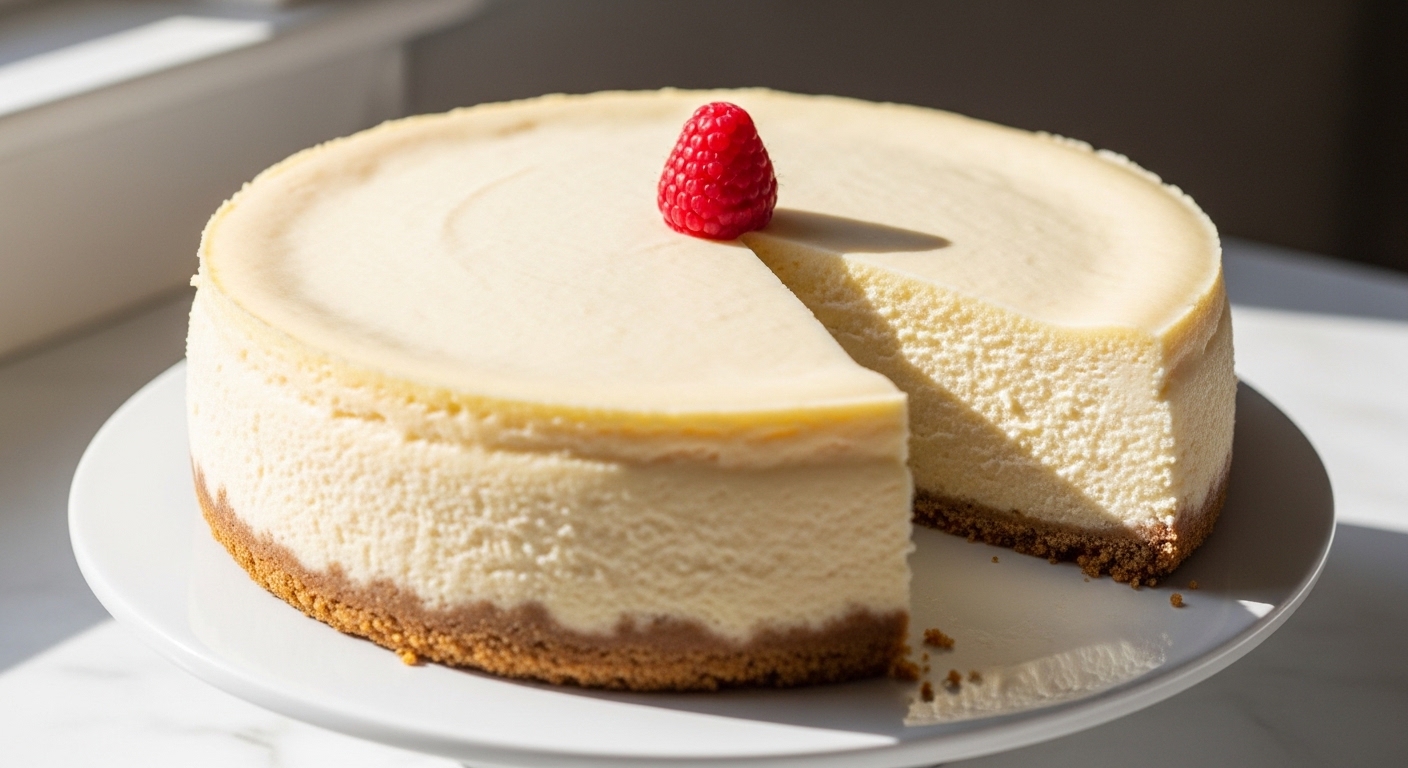
This Classic New York Cheesecake Recipe delivers a smooth, dense, bakery-style texture with zero cracks and bold, rich flavor in every bite.
Introduction
Most cheesecakes are a disappointment — dry edges, sunken centres, and cracks that scream kitchen failure. And somehow, you followed the recipe exactly.
You chilled it. You baked it carefully. You even crossed your fingers — and still ended up with something dense in all the wrong ways. That’s not your fault. That’s bad technique hiding behind pretty photos.
This Classic New York Cheesecake Recipe fixes every one of those problems. It’s built for a smooth, dense texture that melts slowly on your tongue — no cracks, no grainy filling, no soggy crust. You’ll get that bakery-style perfection with a creamy centre and clean slices every time. Ready to stop gambling with your cheesecake? Good. Let’s do it right.
Quick Answer
A Classic New York Cheesecake Recipe uses full-fat cream cheese, eggs, sugar, and sour cream, and is baked low and slow in a water bath. The result is dense yet creamy with a smooth top. Controlled mixing prevents air bubbles. Slow cooling prevents cracks. It’s all about temperature and patience.
Why You’ll Love This Recipe
- Ultra-Smooth Texture
You get a dense, velvety interior that holds its shape yet feels luxuriously creamy on your fork. No graininess, no air pockets — just clean, rich structure. - Crack-Free Top
A controlled water bath and gradual cooling eliminate surface splits. You’ll slice into a flawless, bakery-style finish that looks professionally made. - Deep, Balanced Flavour
Full-fat dairy and precise sugar ratios create bold richness without overwhelming sweetness. Every bite tastes intentional — not heavy, not bland.
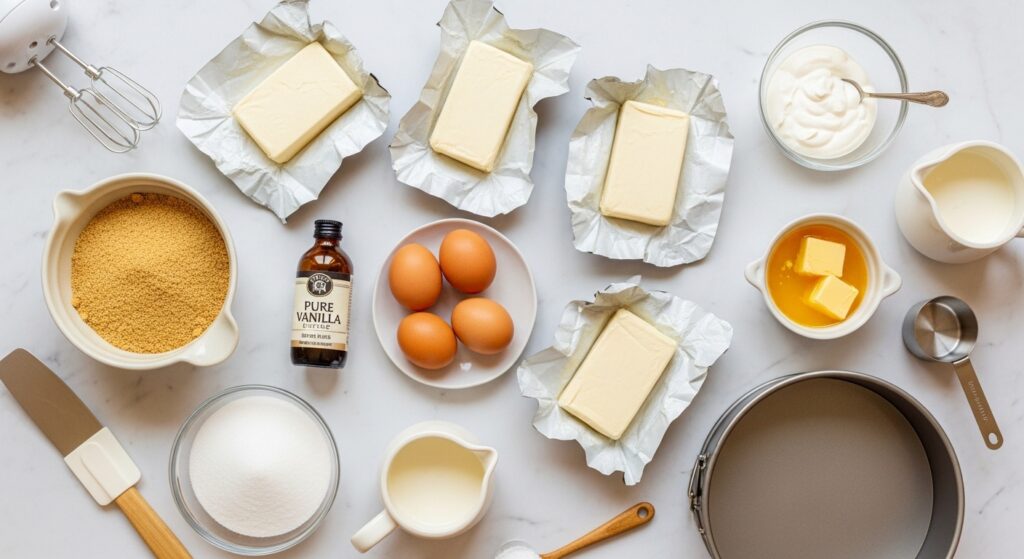
Ingredients List
Dry Ingredients
Graham cracker crumbs — 1 ½ cups (150g)
Granulated sugar — 1 cup (200g), divided
Salt — ¼ teaspoon (1g)
Wet Ingredients
Unsalted butter, melted — 6 tablespoons (85g)
Full-fat cream cheese, softened — 4 blocks (32 oz / 900g)
Large eggs, room temperature — 4
Sour cream — 1 cup (240g)
Pure vanilla extract — 2 teaspoons (10ml)
Heavy cream — ½ cup (120ml)
Toppings / Optional Add-ins
Fresh berries — 1 cup (150g)
Berry compote — ½ cup (120ml)
Lemon zest — 1 teaspoon (2g)
These ingredients may look basic — but the ratios are everything.
Ingredient Notes & Smart Swaps
Cream Cheese
Use full-fat blocks only — not whipped or spreadable tubs. Lower-fat versions contain stabilisers and extra moisture, which can cause a loose or grainy filling.
Sour Cream
Sour cream adds tang and smooth structure. You can swap it with full-fat Greek yoghurt — the texture stays thick, but the flavour becomes slightly sharper.
Graham Crackers
Traditional graham crackers provide subtle sweetness and structure. Swap with digestive biscuits at a 1:1 ratio — they create a slightly deeper, malted flavour.
Heavy Cream
Heavy cream softens the dense structure just enough. Half-and-half works in a pinch, but the cheesecake won’t feel quite as rich or silky.
Temperature matters more than you think. Cold ingredients sabotage texture.
Step-by-Step Instructions
- Prepare the Pan
Preheat your oven to 325°F (163°C). Wrap the outside of a 9-inch springform pan tightly with heavy-duty foil to prevent water leaks. (Warning: One tiny tear can flood your crust.) - Make the Crust
Mix graham crumbs, ¼ cup (50g) sugar, salt, and melted butter until the mixture resembles damp sand. Press firmly into the pan base — it should look compact and slightly glossy. Bake 10 minutes until lightly golden and fragrant. - Beat the Cream Cheese
Using a mixer on medium-low, beat softened cream cheese until completely smooth — no lumps at all. The texture should look like thick frosting. (Pro Tip: Scrape the bowl constantly to prevent hidden pockets.) - Add Sugar and Eggs
Blend in the remaining sugar slowly. Add eggs one at a time, mixing gently — you don’t want air bubbles. The batter should look silky and flow slowly off the spatula. - Finish the Filling
Mix in the sour cream, heavy cream, and vanilla until just combined. Overmixing adds air, and air causes cracks — simple physics. - Water Bath & Bake
Pour batter over the crust, then tap the pan lightly to release trapped air. Place the pan in a roasting tray and pour hot water halfway up the sides. Bake for 60–70 minutes, until the edges are set, but the centre jiggles slightly like gelatin. (Pro Tip: That wobble means creamy.) - Cool Slowly
Turn off the oven, crack the door, and let it sit for 1 hour. Sudden temperature shifts cause cracks — patience prevents disaster.
Pro Tips for Perfect Results
Room Temperature Ingredients
Cold dairy creates lumps — I’ve seen it ruin texture instantly. Let everything sit out at least 60 minutes before mixing.
Low and Slow Baking
High heat forces rapid expansion and collapse. I once tested 350°F — and the cracks were immediate and dramatic.
Don’t Chase Doneness
That slight jiggle in the centre looks underbaked, but it firms up as it cools. Pulling it too late creates dryness — trust the wobble.
Common Mistakes to Avoid
Overmixing the Batter
Too much mixing traps air, which expands in the oven and collapses later. Mix gently and stop as soon as the ingredients combine.
Skipping the Water Bath
Dry oven heat leads to uneven baking and surface cracks. The steam keeps the environment stable and gentle.
Cooling Too Fast
Moving it straight to the counter shocks the structure. Gradual cooling prevents surface tension, which can cause splits.
Variations & Substitutions
Gluten-Free Version
Use gluten-free graham crackers in the same quantity. The butter binds them the same way, so texture remains firm and cohesive.
Chocolate Swirl Cheesecake
Melt 4 oz (115g) dark chocolate and swirl it into the batter before baking. The cocoa butter enriches the structure while adding bittersweet depth.
Lemon New York Cheesecake
Toss in 1 tablespoon of lemon zest along with 2 teaspoons of fresh juice. The acidity brightens the flavour and slightly tightens the protein structure, resulting in a cleaner slice.
What to Serve With It
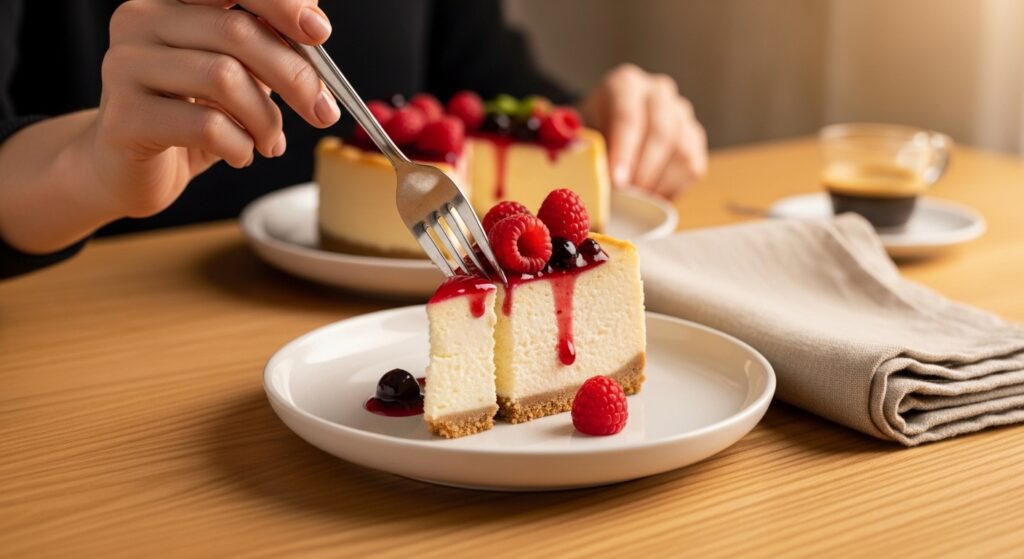
Fresh raspberry sauce adds tart contrast to the dense filling. Lightly sweetened whipped cream softens each bite.
Pair with hot espresso or strong black coffee — bitterness balances richness. Sparkling wine also works beautifully.
Serve it at holidays, birthdays, or when you want a guaranteed showstopper on your dessert table.
Storage & Reheating Instructions
Store in the refrigerator up to 5 days in an airtight container. Place a paper towel under the lid to absorb condensation and prevent surface moisture.
Freeze slices individually wrapped in plastic and foil for up to 2 months. Thaw overnight in the fridge.
For the creamiest texture, let slices sit at room temperature for 20 minutes before serving. Cold cheesecake tastes firmer than it should.
Nutrition Facts (per serving)
| Calories | 520 |
| Protein | 9g |
| Carbohydrates | 38g |
| Fats | 38g |
| Fiber | 1g |
| Sodium | 320mg |
| Key Vitamins/Minerals | Calcium, Vitamin A |
FAQs
Why did my cheesecake crack even with a water bath?
Cracks usually happen from overmixing or rapid cooling, not just dry heat. Even with steam, trapped air expands and collapses. Mix gently and cool gradually inside the oven. A surprising fix? Running a thin knife around the edge right after baking reduces tension.
How do I know when New York cheesecake is done?
The edges should look set and slightly puffed while the centre jiggles like soft gelatin. It shouldn’t slosh. The internal temperature should be about 150°F (65°C). That wobble disappears as it chills — that’s the secret to creamy texture.
Can I make this Classic New York Cheesecake Recipe ahead of time?
Yes, and you should. Cheesecake improves after chilling at least 8 hours because the fats solidify and flavours settle. Day-two texture is firmer and cleaner when sliced. I always bake it the night before serving.
Why is my cheesecake grainy?
Graininess often comes from cold cream cheese or overbaking. Proteins tighten too much under high heat. Keep ingredients at room temperature and bake gently — slow heat helps maintain a smooth texture.
Do I really need a springform pan?
Technically, no, but it makes removal safer and cleaner. A standard pan traps the crust, increasing the risk of cracks during release. If using a regular pan, line it with parchment and leave overhang for lifting.
Conclusion
A flawless cheesecake isn’t luck — it’s control. From the gentle water bath to that slight centre jiggle at 150°F, every detail in this Classic New York Cheesecake Recipe exists for a reason. You deserve a dessert that slices cleanly and tastes rich without being heavy. So bake it. Chill it properly. Then come back and tell me — did you finally get that smooth, dense, bakery-style perfection? Drop a comment, share your results, or try another recipe next.