Now Reading: Best Roasted Cabbage Recipe (Crispy, Caramelized & Ready in 30 Minutes)
-
01
Best Roasted Cabbage Recipe (Crispy, Caramelized & Ready in 30 Minutes)

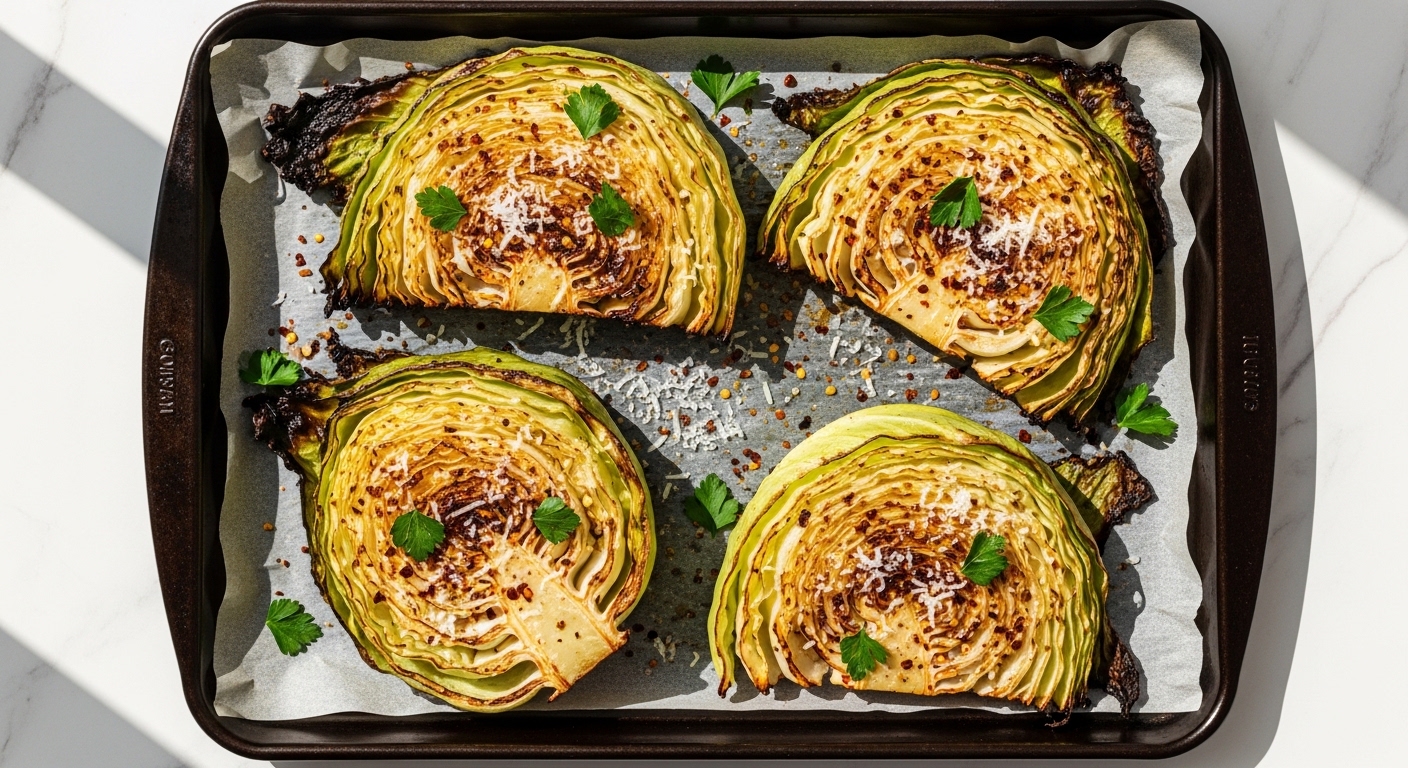
Make the best roasted cabbage recipe in just 30 minutes — crispy edges, deep caramelization, and bold flavor. The vegetable side dish you'll actually crave.
Introduction
Most people boil cabbage — and that’s exactly why most people hate cabbage. Boiling strips every ounce of flavor, leaves you with a soggy, sulphur-smelling pile, and gives vegetables a bad reputation they don’t deserve.
You’ve pushed cabbage to the edge of your plate before. Maybe you’ve served it soft and steaming and watched everyone politely ignore it. That’s not cabbage failing you — that’s the wrong cooking method failing both of you.
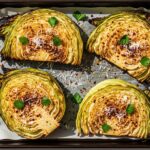
This best roasted cabbage recipe changes everything. High heat drives out moisture fast, caramelizes the natural sugars in every leaf, and builds crispy, golden edges with a tender center that actually tastes like something worth eating. Thirty minutes. One pan. Zero disappointment.
Quick Answer
The best roasted cabbage is made by slicing a head of cabbage into thick steaks or wedges, brushing generously with olive oil and seasoning, then roasting at 425°F (220°C) for 25-30 minutes until the edges turn deeply caramelized and crisp. The result is tender inside, crunchy outside, and bold in flavor.
Why You’ll Love This Recipe
- The edges go deeply golden and crisp — not soft or soggy. High heat at 425°F drives moisture out fast, which means the cabbage roasts rather than steams, creating that caramelized crust that makes every bite worth eating.
- It’s a one-pan side dish that requires almost no prep. Slice, season, roast — that’s the entire process, and the oven does the heavy lifting while you focus on the rest of the meal.
- The flavor transforms completely from raw to roasted. Roasting converts cabbage’s sharp, slightly bitter raw taste into something nutty, sweet, and deeply savory — a completely different vegetable from what most people grew up eating.
Ingredients List
Main Ingredients:
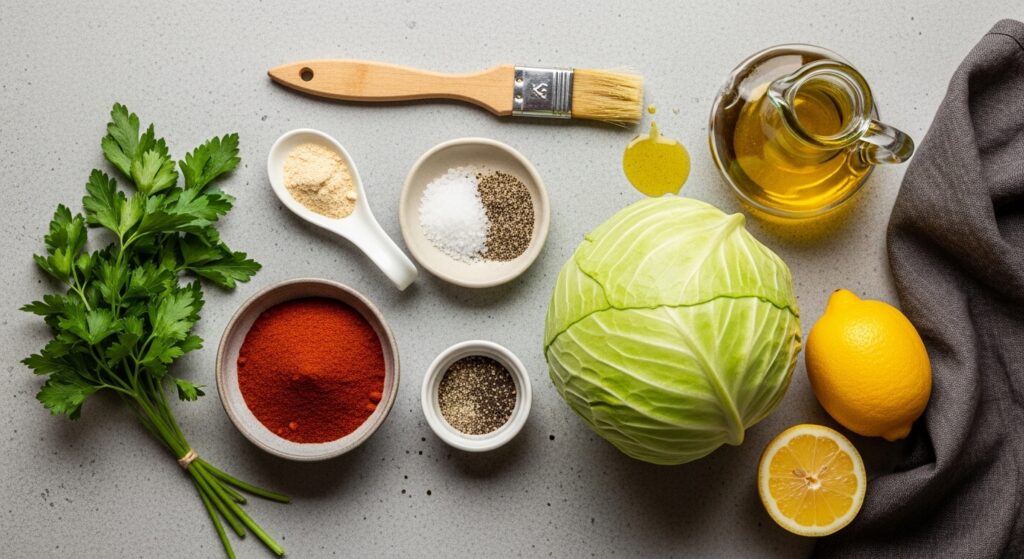
- Green cabbage — 1 large head (about 900 g), cut into 1-inch steaks or wedges
- Extra virgin olive oil — 3 tablespoons (45 ml)
- Garlic powder — 1 teaspoon (3 g)
- Smoked paprika — 1 teaspoon (3 g)
- Kosher salt — 1 teaspoon (6 g)
- Black pepper — ½ teaspoon (2 g), freshly cracked
Optional Finishing Touches:
- Parmesan cheese — ¼ cup (25 g), freshly grated
- Red pepper flakes — ¼ teaspoon (1 g)
- Fresh lemon juice — 1 tablespoon (15 ml), squeezed over after roasting
- Fresh parsley — 2 tablespoons (8 g), chopped
These few ingredients let the cabbage do the work — but the finishing touches take it from good to genuinely impressive.
Ingredient Notes & Smart Swaps
Cabbage: Green cabbage is the standard here — its tight, dense leaves hold their structure under high heat and develop the deepest caramelization. Red cabbage works too, but it roasts slightly faster and turns a dramatic purple-brown that looks striking on the plate.
Olive Oil: Don’t go light on the oil — under-oiled cabbage dries out and burns at the edges before the center softens. Every surface needs a thin, even coat. Avocado oil is the best swap — higher smoke point, neutral flavour, identical result.
Smoked Paprika: Regular paprika works but delivers a flatter result. Smoked paprika adds a subtle depth that mimics the char you’d get from grilling — it’s the detail that makes people ask what’s in it without being able to place it.
Garlic Powder: Fresh garlic burns at 425°F before the cabbage finishes roasting — use garlic powder only. It distributes evenly across every surface and delivers consistent flavour without the bitter, scorched taste that fresh garlic produces at high heat.
Step-by-Step Instructions
- Preheat oven to 425°F (220°C). Cover a large baking sheet with parchment paper — foil is not recommended here. Parchment prevents sticking and promotes more even browning across the bottom surface of each cabbage piece.
- Slice the cabbage. Remove the outer leaves, then cut the cabbage through the core into 1-inch thick steaks. Keep the core intact — it holds each steak together during roasting. The cut surface should look pale green and tightly layered. (Pro Tip: Cut steaks from the center of the head — the outer wedges fall apart more easily because the core doesn’t run through them.)
- Season generously. Lay the steaks flat on the baking sheet. Brush both sides with olive oil until every surface looks glossy and lightly coated. Sprinkle garlic powder, smoked paprika, salt, and black pepper evenly across the top — the seasoning should look visible, not invisible. (Warning: Skipping the oil on the bottom side causes the cabbage to stick and steam instead of roast — the bottom surface ends up pale and soft instead of caramelized.)
- Roast for 25-30 minutes. Place in the preheated oven and roast without flipping for the first 20 minutes. The edges will start turning deep golden brown and the kitchen will smell nutty and slightly sweet — that’s the caramelization building. Flip each steak carefully and roast for another 8-10 minutes until both sides show deep colour. (Pro Tip: Don’t crowd the pan — overlapping pieces trap steam and prevent browning. Use two baking sheets if needed.)
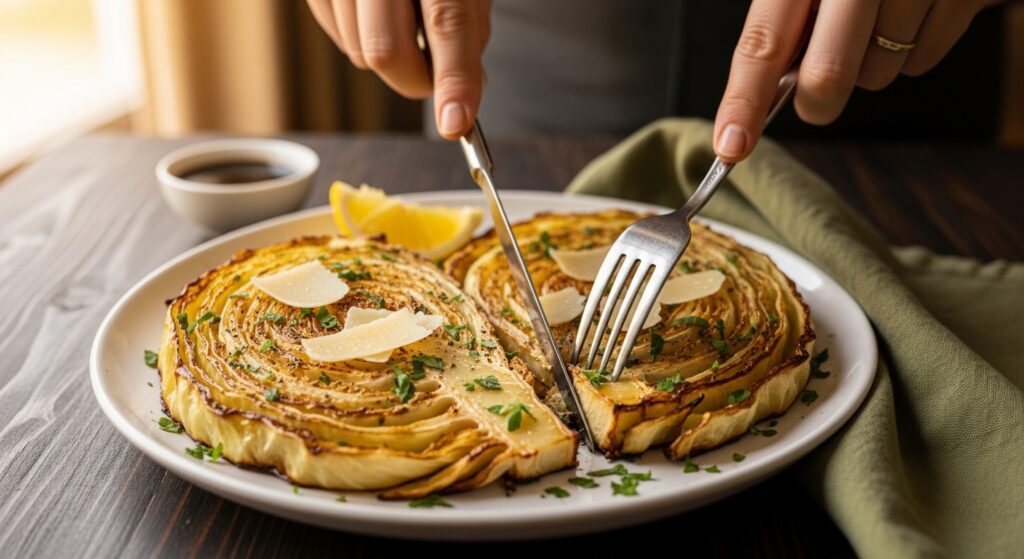
- Finish and serve. Remove from the oven when the edges are deeply caramelized and crisp — they should feel firm when pressed lightly with a spatula. Squeeze fresh lemon juice over immediately, add parmesan and parsley if using, and serve hot.
Pro Tips for Perfect Results
Don’t Flip Too Early. The caramelized crust needs uninterrupted contact with the hot pan to develop properly — flipping before 20 minutes tears the crust off before it sets. Patience at this stage is the difference between golden and great.
Use the Broiler for the Last 2 Minutes. After roasting, switch to broil on high for 2 minutes — this blasts the top surface with direct heat and creates extra-crispy edges that no amount of regular roasting replicates. Watch it closely — it goes from perfect to burnt in under a minute.
Salt After Roasting Too. Season before roasting for flavour — but add a small pinch of flaky sea salt after roasting for texture. The salt crystals stay crunchy on the hot surface and deliver a burst of flavour with every bite that pre-roasting salt simply can’t provide.
Common Mistakes to Avoid
Cutting Too Thin. Cabbage steaks thinner than ¾ inch cook too fast — the edges burn before the center softens. Stick to 1-inch thickness for the right balance between crispy exterior and tender interior. Thicker cuts need longer roasting time but reward you with better texture.
Roasting at Low Temperature. Anything below 400°F causes cabbage to release moisture faster than it evaporates — the result is steamed, soft cabbage rather than roasted, caramelized cabbage. High heat is non-negotiable for the texture this recipe promises.
Skipping the Core. Cutting the core out before roasting causes the leaves to separate and scatter across the pan. The core is structural — it holds the steak together through the entire roasting process. Remove it only after the cabbage is fully cooked and plated.
Variations & Substitutions
Parmesan Crusted Version: Sprinkle freshly grated Parmesan over the cabbage steaks in the last 5 minutes of roasting. The cheese melts into the caramelized surface and forms a salty, crispy crust — the fat in the cheese accelerates browning and adds richness that balances the natural bitterness of cabbage beautifully.
Spicy Roasted Cabbage: Add ½ teaspoon of cayenne pepper and 1 teaspoon of chili flakes to the seasoning mix. The heat intensifies as the cabbage roasts — the spice blooms into the oil and coats every surface, creating a slow, building warmth that contrasts perfectly with the natural sweetness of caramelized cabbage.
Vegan Balsamic Glaze Version: Drizzle 2 tablespoons of balsamic vinegar over the cabbage in the last 8 minutes of roasting. The vinegar reduces in the oven heat into a thick, sticky glaze — the acidity brightens the deep roasted flavour and the natural sugars in balsamic caramelize against the hot pan surface.
What to Serve With It
Serve alongside roasted chicken or grilled salmon — the caramelized, slightly sweet cabbage cuts through rich proteins without competing with them. Pair with creamy mashed potatoes for a complete comfort meal that covers every texture — crispy, creamy, and hearty all at once. For drinks, a cold sparkling water with lemon or a light white wine balances the deep roasted flavours perfectly. This dish works especially well for weeknight dinners when you need a vegetable side that actually impresses.
Storage Instructions
Store leftover roasted cabbage in an airtight glass container in the refrigerator for up to 4 days. Glass preserves the roasted flavour better than plastic — plastic containers absorb the cabbage’s sulphur compounds and transfer that smell back into the food. This dish doesn’t freeze well — the texture turns completely soft on thawing. Here’s the hack nobody mentions: reheat roasted cabbage in a dry skillet over high heat for 3-4 minutes instead of the microwave — the direct contact with the hot pan re-crisps the edges and restores most of the original texture that microwaving destroys completely.
Nutrition Facts (per serving)
| Nutrient | Amount |
|---|---|
| Calories | 110 |
| Protein | 3 g |
| Carbohydrates | 10 g |
| Fats | 7 g |
| Fiber | 4 g |
| Sodium | 290 mg |
| Key Vitamins/Minerals | Vitamin C, Vitamin K, Folate |
FAQs
How do you make roasted cabbage crispy? Roast at 425°F (220°C) on a parchment-lined pan without crowding — overcrowding traps steam and prevents crisping. Brush every surface with oil before roasting and don’t flip until the first 20 minutes are complete. For extra crispiness, switch to broil for the final 2 minutes — it makes a dramatic difference.
Can you roast cabbage without oil? Technically yes, but the result is dramatically different — dry-roasted cabbage dehydrates and turns chewy rather than caramelized and tender. Oil conducts heat across every surface and promotes even browning. A light spray of cooking oil is the minimum needed — skipping it entirely produces a tough, dry result that most people won’t enjoy.
How long does roasted cabbage take in the oven? At 425°F (220°C), cabbage steaks take 25-30 minutes total — 20 minutes undisturbed, then flipped for 8-10 more minutes. Thinner cuts finish in 20-22 minutes. The cabbage is done when the edges are deeply golden brown and firm when pressed — pale edges mean it needs more time regardless of the clock.
What temperature is best for roasting cabbage? 425°F (220°C) is the sweet spot — hot enough to caramelize the natural sugars quickly without burning the outer leaves before the center softens. Lower temperatures produce steamed rather than roasted results. Higher temperatures risk burning the edges before the interior cooks through properly.
Is roasted cabbage healthy? Roasted cabbage is genuinely nutritious — low in calories at around 110 per serving, high in fiber, and rich in Vitamin C and Vitamin K. Roasting with olive oil adds healthy monounsaturated fats. Unlike boiling — which leaches water-soluble vitamins into the cooking water — roasting preserves most of the cabbage’s natural nutrients.
Conclusion
You wanted a vegetable side dish that actually delivers — crispy edges, caramelized depth, and a flavor that makes people reach for seconds. This best roasted cabbage recipe does exactly that, starting with 425°F heat and one generously oiled baking sheet.
Make it tonight. Slice thick, season bold, and don’t rush the flip. Did you add parmesan? Try the balsamic glaze? Drop a comment and tell me how yours turned out — or share this with someone who still thinks cabbage is boring. Try our Best Creamy Cucumber Salad Recipe next — same fresh approach, completely different result. 😊