Now Reading: Best Tiramisu Recipe (Rich, Creamy & Authentic Italian Style)
-
01
Best Tiramisu Recipe (Rich, Creamy & Authentic Italian Style)

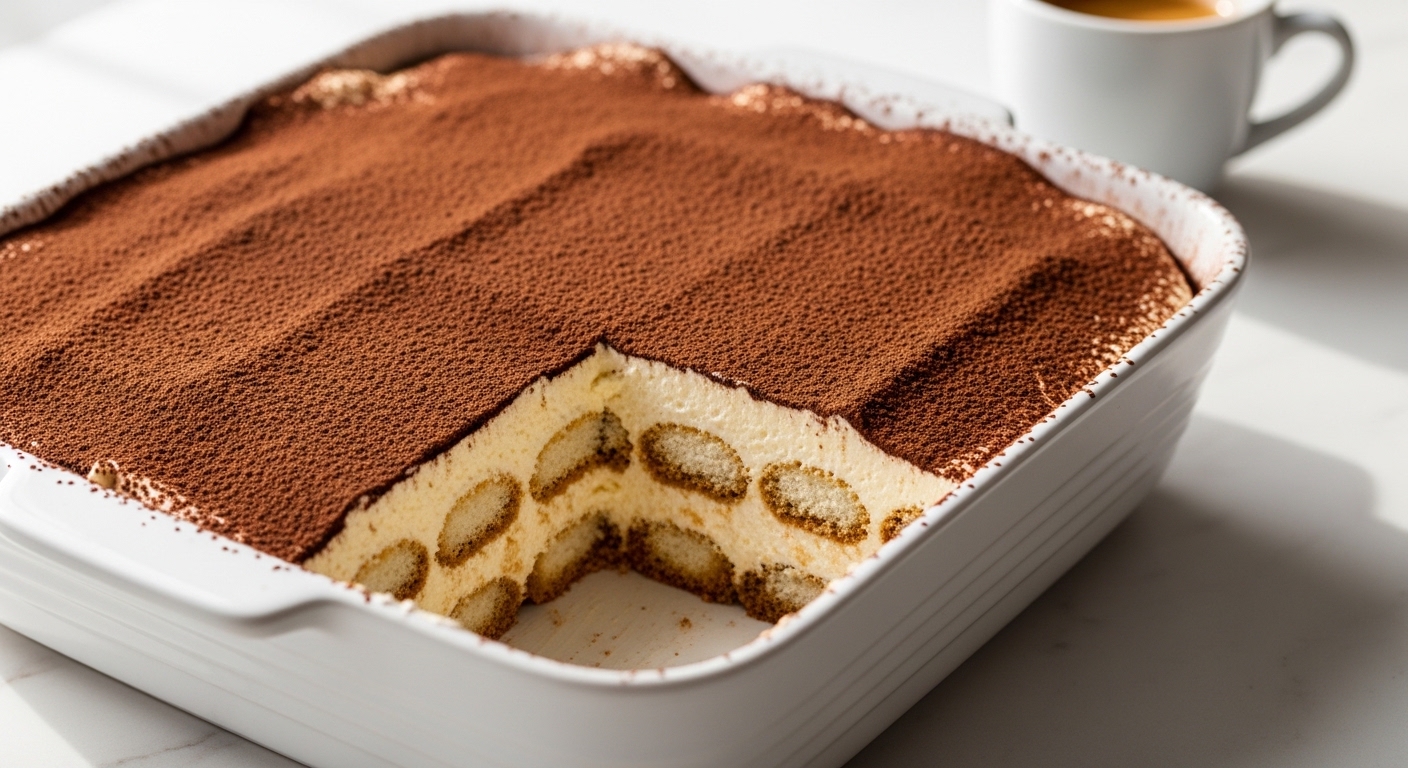
Discover the Best Tiramisu Recipe with rich mascarpone cream, espresso-soaked ladyfingers, and authentic Italian flavor — perfectly layered and irresistibly creamy.
Introduction
Watery cream. Soggy layers. Flat coffee flavor. That’s what most tiramisu recipes deliver — and somehow people accept it. They shouldn’t. A proper Best Tiramisu Recipe should slice clean, hold its layers, and taste boldly of espresso and mascarpone — not sugar and air.
You’ve probably followed a recipe exactly, chilled it overnight, and still ended up with a loose, pudding-like mess. The ladyfingers collapsed. The filling wept. The cocoa turned muddy. That’s not your fault — that’s poor ratios and rushed technique.
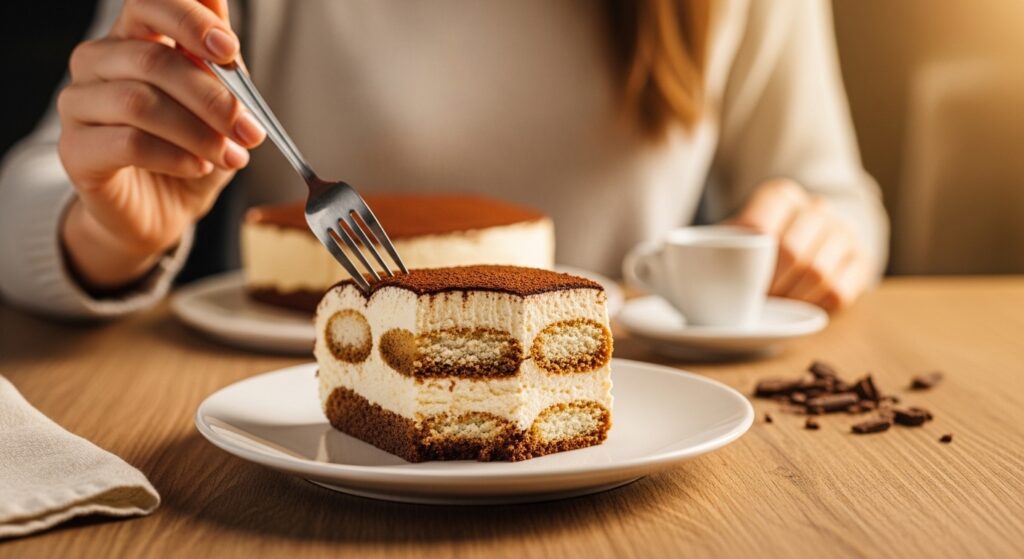
This version fixes those mistakes at the root. Balanced mascarpone cream, correctly whipped eggs, quick espresso dips — not soaked bricks — and structured layering that sets beautifully. You’ll get defined layers, rich flavor, and a texture that feels luxurious but never heavy.
Ready to make tiramisu the right way?
Quick Answer
The Best Tiramisu Recipe layers espresso-dipped ladyfingers with a thick mascarpone and egg cream, then chills until fully set. The key is brief coffee dipping and properly whipped yolks for structure. Dust with cocoa just before serving for bold flavor and clean presentation. Slice cold for sharp layers.
Why You’ll Love This Recipe
- Structured, Clean Layers — The mascarpone filling is thick enough to hold shape when sliced, so you don’t get collapsing sides or sliding layers. Each bite delivers defined cream and espresso-soaked biscuit.
- Bold Coffee Flavor — Strong espresso is used strategically, not excessively, so the dessert tastes rich and balanced instead of watery or bitter. The cocoa finish sharpens that depth without overpowering the sweetness.
- Authentic Texture — Whipped egg yolks and gently folded whites create a cream that feels airy yet stable. It’s light on the spoon but rich on the palate — exactly how classic Italian tiramisu should feel.
Ingredients List
Dry Ingredients
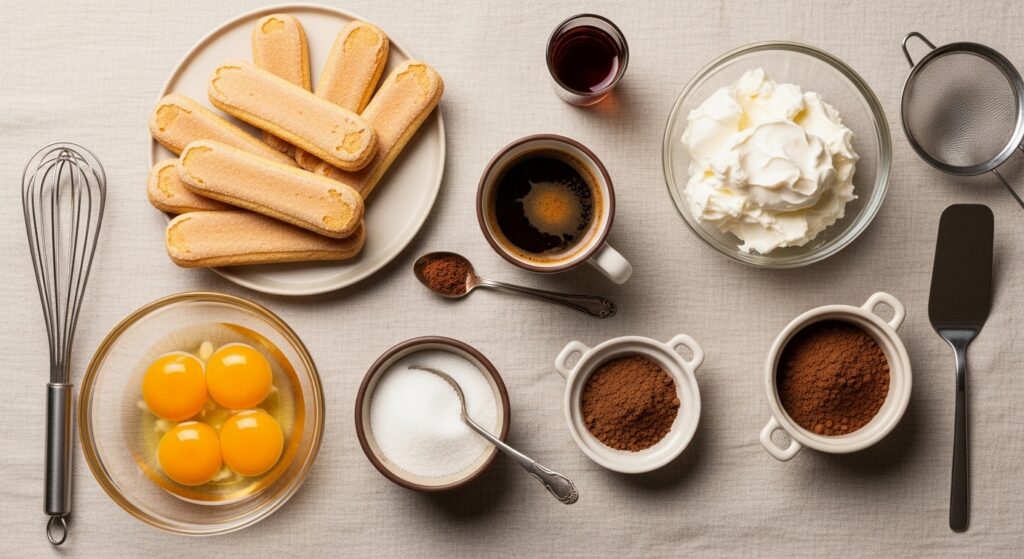
Ladyfinger biscuits (savoiardi) — 24 pieces (200 g)
Unsweetened cocoa powder — 2 tablespoons (15 g)
Wet Ingredients
Mascarpone cheese — 16 oz (450 g)
Large egg yolks — 4
Large egg whites — 3
Granulated sugar — ½ cup (100 g)
Strong brewed espresso, cooled — 1 cup (240 ml)
Dark rum (optional) — 1 tablespoon (15 ml)
Optional Add-ins
Dark chocolate shavings — ¼ cup (30 g)
Every ingredient has a job — especially the eggs.
Ingredient Notes & Smart Swaps
Mascarpone: Use full-fat only. Low-fat versions break and turn grainy when mixed — and yes, that ruins everything.
Eggs: Fresh eggs matter because you’re whipping them for volume and stability. If you’re concerned about raw eggs, use pasteurized ones; they whip almost as well and reduce the risk.
Espresso: Brew it strong and let it cool completely. Hot coffee softens ladyfingers too fast, and you’ll lose structure before chilling even begins.
Ladyfingers: Use crisp, dry savoiardi — not soft cake-style ones. The dry texture absorbs espresso evenly without collapsing.
Swap Option: For alcohol-free tiramisu, replace rum with extra espresso or a teaspoon of vanilla extract. Flavor stays deep without changing texture.
Step-by-Step Instructions
- Brew 1 cup of espresso and let it cool fully to room temperature. Stir in rum if using. The liquid should smell bold and slightly bitter — that intensity balances the cream.
- Grab a heatproof bowl and whisk the egg yolks together with the sugar. Place over gently simmering water (about 160°F / 71°C steam heat) and whisk 4–5 minutes until pale, thick, and slightly foamy. (Pro Tip: The mixture should ribbon slowly off the whisk.)
- Remove from heat and cool 5 minutes. Add mascarpone and beat until smooth and thick — no lumps, no overmixing.
- In a clean bowl, whip the egg whites to medium peaks. They should stand tall but still curl slightly at the tips. (Warning: Overwhipped whites turn grainy and collapse when folded.)
- Gently fold the whites into the mascarpone mixture in two additions. Use wide strokes — don’t stir aggressively — until the cream looks airy and uniform.
- Quickly dip each ladyfinger into espresso for 1 second on each side. Not longer. They should feel damp on the outside but firm on the inside.
- Arrange a tight layer in a 9×9-inch (23×23 cm) dish. Spread half the mascarpone cream evenly on top, smoothing with an offset spatula.
- Repeat layers once more. Cover tightly and refrigerate at 38°F (3°C) for at least 6 hours, preferably overnight. (Pro Tip: Longer chilling equals cleaner slices.)
- Dust cocoa just before serving. The surface should look velvety and dry — not wet or patchy.
Pro Tips for Perfect Results
Dip Fast, Move On — One second per side is enough. I’ve tested longer dips, and they always lead to soggy layers.
Chill Longer Than You Think — Six hours is the minimum, but overnight gives cleaner cuts. The structure fully stabilizes as fats firm up.
Cocoa at the End — Dust right before serving, not hours earlier. Cocoa absorbs moisture and turns dark and sticky if added too soon.
Common Mistakes to Avoid
Over-Soaking Ladyfingers — Excess espresso breaks down structure. Quick dips keep the center intact while adding flavor.
Overmixing Mascarpone — Beating too long makes it loose and grainy. Mix just until smooth.
Skipping Chill Time — Cutting early causes the cream to collapse because it hasn’t set. Patience here is everything.
Variations & Substitutions
Chocolate Tiramisu: Add 2 tablespoons of cocoa to the mascarpone mixture. Cocoa thickens slightly and deepens flavor.
Strawberry Version: Replace espresso with strawberry puree and skip rum. The fruit acidity balances mascarpone richness.
Gluten-Free Option: Use gluten-free ladyfingers. Structure remains stable because mascarpone cream provides primary support.
What to Serve With It
Serve with a strong espresso to amplify flavor contrast. A small glass of dessert wine works beautifully. Fresh raspberries add brightness. Ideal for dinner parties or holiday gatherings.
Storage & Reheating Instructions
Store in the refrigerator, covered, for up to 3 days. Press plastic wrap directly onto the surface to prevent condensation from dripping onto the cocoa.
Freeze tightly wrapped for up to 1 month; thaw overnight in the fridge.
Do not microwave. Ever. If slightly firm, let it sit at room temperature exactly 15 minutes before slicing — texture softens perfectly without melting.
Nutrition Facts (per serving)
| Calories | 420 |
| Protein | 8 g |
| Carbohydrates | 36 g |
| Fats | 27 g |
| Fiber | 1 g |
| Sodium | 95 mg |
| Key Vitamins/Minerals | Calcium, Vitamin A, Iron |
FAQs
How long should tiramisu chill before serving?
At least 6 hours, but overnight is better. The fats in mascarpone firm up, stabilizing layers. Cutting too early causes sliding and collapse.
Can I make tiramisu without raw eggs?
Yes, cook yolks gently over steam until slightly thickened. This improves safety while keeping traditional flavor and texture.
Why is my tiramisu watery?
Over-soaked ladyfingers or overmixed mascarpone cause excess moisture. Quick dips and gentle folding prevent this issue.
Can tiramisu be frozen?
Yes, freeze tightly wrapped for up to one month. Thaw slowly in the fridge to preserve texture.
What makes authentic tiramisu different?
Authentic versions rely on mascarpone, espresso, and eggs — no whipped cream. The egg-based cream gives a richer texture and cleaner slices.
Conclusion
Defined layers. Bold espresso. Cream that actually holds its shape. That’s what this Best Tiramisu Recipe delivers when you dip fast, fold gently, and chill long enough.
Respect the structure — especially that one-second espresso dip — and you’ll slice into clean, beautiful layers every time.
Make it once, and you’ll never settle for watery tiramisu again. Try it, chill it overnight, and tell me how your layers turned out. Then share it — because this is how tiramisu should taste.