Now Reading: Best Potato Salad Recipe (Creamy, Classic & Full of Flavor)
-
01
Best Potato Salad Recipe (Creamy, Classic & Full of Flavor)
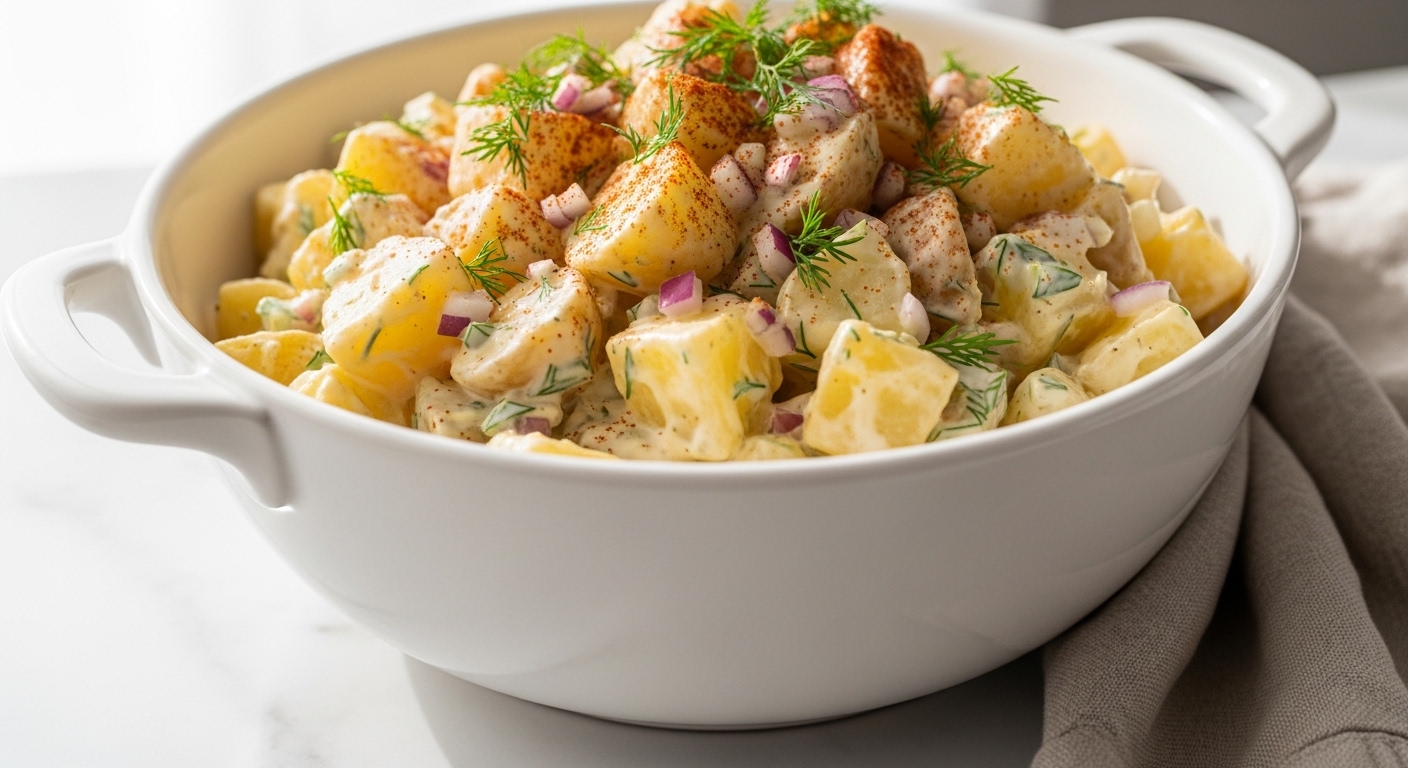

This Best Potato Salad Recipe is creamy, classic, and full of bold flavor — tender potatoes, balanced dressing, and perfect texture every time.
Introduction
Bland potato salad is everywhere — and most versions are either gluey, drowning in mayo, or weirdly dry in the center. That’s not tradition. That’s bad technique. A truly great Best Potato Salad Recipe shouldn’t taste like cold mashed potatoes with random crunch thrown in.
You boiled the potatoes. You mixed the dressing. You chilled it. And somehow it still turned out flat, watery, or overly heavy. Frustrating, right? That’s not your fault — it’s a ratio problem and a timing mistake.
This recipe fixes that. Properly seasoned potatoes while they’re still warm, balanced creaminess, sharp mustard bite, and texture that actually holds together without turning stiff. The result is tender, flavor-soaked chunks that pull the whole dish together rather than fight it.
Ready to stop settling for mediocre potato salad? Good. Let’s do it right.
Quick Answer
The Best Potato Salad Recipe starts by salting the cooking water aggressively and dressing the potatoes while they’re warm. A balanced mix of mayo, mustard, vinegar, and crunchy add-ins creates structure and brightness. Chill to set the texture, but don’t overdress. The result is creamy, seasoned, and never watery.
Why You’ll Love This Recipe
- Perfectly Seasoned Potatoes — The potatoes absorb flavor while warm, so you don’t end up with bland centers hiding under salty dressing. Every bite tastes complete, not coated.
- Creamy but Structured Texture — The dressing clings to the cubes instead of pooling at the bottom. It stays thick and balanced even after chilling overnight.
- Real Flavor Contrast — Tangy mustard, subtle vinegar, crisp celery, and soft eggs create layers instead of monotone heaviness. You actually taste ingredients working together instead of fighting each other.
Ingredients List
Dry Ingredients
Kosher salt — 1½ tablespoons for boiling (18 g)
Black pepper — ½ teaspoon (2 g)
Paprika — ½ teaspoon (2 g)
Wet Ingredients
Yukon Gold potatoes — 2½ pounds (1.1 kg)
Mayonnaise — ¾ cup (180 ml)
Dijon mustard — 1½ tablespoons (22 ml)
Apple cider vinegar — 1 tablespoon (15 ml)
Toppings / Optional Add-ins
Celery, finely diced — ½ cup (60 g)
Red onion, minced — ¼ cup (40 g)
Hard-boiled eggs, chopped — 3 large
Fresh dill, chopped — 1 tablespoon (4 g)
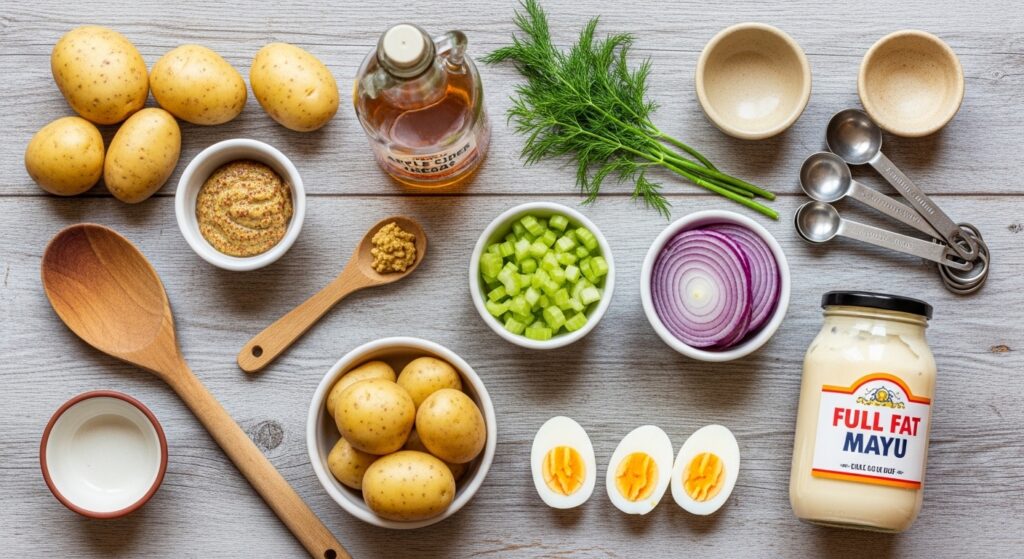
Simple ingredients — handled correctly, they’re powerful.
Ingredient Notes & Smart Swaps
Yukon Gold Potatoes: Use waxy potatoes. Russets fall apart and turn grainy — that’s why so many bowls look like mashed salad. Yukon Golds hold shape and absorb dressing without collapsing.
Mayonnaise: Full-fat only. Everyone claims light mayo works the same — it doesn’t. Lower-fat releases water and thins the dressing after chilling.
Apple Cider Vinegar: This brightens without overpowering. White vinegar tastes harsh here; cider vinegar gives subtle sweetness and depth.
Mustard: Dijon adds sharp complexity. Yellow mustard works in a pinch, but reduce quantity slightly — it’s more acidic and can dominate quickly.
Eggs: Chop them small. Large chunks create a texture imbalance, making the salad feel heavy rather than cohesive.
Step-by-Step Instructions
- Bring a large pot of water to a rolling boil at 212°F (100°C). Don’t hold back on the salt — the water should taste like mild seawater before you even think about adding the pasta. This is your only chance to season the potatoes from the inside out.
- Add peeled and cubed potatoes, about 1 inch in size. Simmer 12–15 minutes until just fork-tender — not falling apart. You’re looking for edges that soften but don’t crumble when lifted. (Warning: Overcook them and you’ll get glue.)
- Drain immediately and spread on a sheet pan for 5 minutes. Steam escapes, surface dries slightly, and texture firms up. This small pause changes everything.
- While potatoes are still warm — not hot — sprinkle 1 tablespoon vinegar directly over them. They’ll absorb it fast, and you’ll smell that subtle tang. (Pro Tip: Warm potatoes soak flavor better than cold ones.)
- In a separate bowl, whisk mayo, mustard, pepper, and paprika until smooth and thick. It should coat the back of a spoon without sliding off quickly.
- Fold potatoes gently into dressing using a spatula, lifting from the bottom. Don’t stir aggressively — you want intact cubes, not paste.
- Add celery, onion, eggs, and dill last. Texture matters here; the crunch should feel deliberate, not random. (Pro Tip: Chill at 38°F / 3°C for at least 1 hour before serving so dressing sets properly.)
Pro Tips for Perfect Results
Salt the Water Boldly — Underseasoned water creates bland interiors that no dressing can fix later. I’ve tested this side-by-side — it’s night and day.
Dress While Warm — Potatoes absorb acid best when slightly warm. Wait until it is fully cold, and the flavor just sits on the outside.
Rest Before Serving — Minimum 1 hour in the fridge. Two hours is better because starch tightens slightly and flavors blend evenly.
Common Mistakes to Avoid
Overcooking Potatoes — They break down and create a gummy texture. Check at 12 minutes and stop once the fork slides in easily.
Adding Dressing to Steaming Hot Potatoes — Heat breaks the mayo structure, making it oily. Let them cool slightly first.
Skipping Acid — Without vinegar or mustard, the salad tastes heavy and flat. Acid balances fat and sharpens overall flavor.
Variations & Substitutions
German-Style Twist: Replace half the mayo with warm bacon vinaigrette. The fat and vinegar combination cuts heaviness and creates a bold contrast.
Vegan Option: Use plant-based mayo and skip eggs. Add chopped pickles instead — acidity and texture keep the balance intact.
Herb-Forward Version: Add chopped chives and parsley. Fresh herbs brighten starch-heavy dishes and prevent flavor fatigue.
What to Serve With It
Serve alongside grilled chicken or burgers for contrast. Pair with barbecue ribs for classic comfort. A crisp green salad balances richness. Iced tea or light lemonade keeps the palate fresh. Ideal for cookouts, potlucks, and family dinners where sides actually matter.
Storage & Reheating Instructions
Store in an airtight container in the fridge up to 4 days. Press plastic wrap directly on the surface before sealing — it prevents condensation from thinning the dressing.
Freezing isn’t recommended; mayo separates when thawed.
If it stiffens after chilling, stir in exactly 1 tablespoon warm water or milk — not extra mayo — to loosen the texture without making it greasy.
Nutrition Facts (per serving)
| Calories | 310 |
| Protein | 6 g |
| Carbohydrates | 32 g |
| Fats | 18 g |
| Fiber | 3 g |
| Sodium | 520 mg |
| Key Vitamins/Minerals | Vitamin C, Potassium, Vitamin B6 |
FAQs
Why is my potato salad watery the next day?
Excess moisture usually comes from under-drained potatoes or low-fat mayo separating. Let the potatoes steam-dry briefly before mixing. Also, salt draws out water over time, so balance seasoning carefully.
Can I make potato salad ahead of time?
Yes — and it improves after resting for at least one hour chilled. Flavors blend and texture firms slightly, making it more cohesive and balanced.
What potatoes are best for potato salad?
Waxy potatoes, like Yukon Golds or red potatoes, hold their shape and resist crumbling. Starchy potatoes break down too easily during mixing.
How long can potato salad sit out?
No more than 2 hours at room temperature. After that, bacterial growth risk increases quickly, especially with mayo-based dressing.
Should I peel the potatoes?
Peeling creates a smoother texture, but thin skins on Yukon Gold are fine to leave on. They add subtle structure without toughness.
Conclusion
Creamy. Structured. Properly seasoned from the inside out. That heavy salting of the water and dressing while warm step — that’s the difference maker.
You don’t need more mayo. You need better timing.
Make it once and compare it to every bland version you’ve had before. Then tweak herbs, adjust mustard, and make it yours.
When someone asks why it tastes better, you’ll know exactly why. Now go make a potato salad that actually deserves space on the table — and tell me how it turned out.