Now Reading: Best Sourdough Discard Recipes: Easy, Quick & No-Waste Ideas
-
01
Best Sourdough Discard Recipes: Easy, Quick & No-Waste Ideas

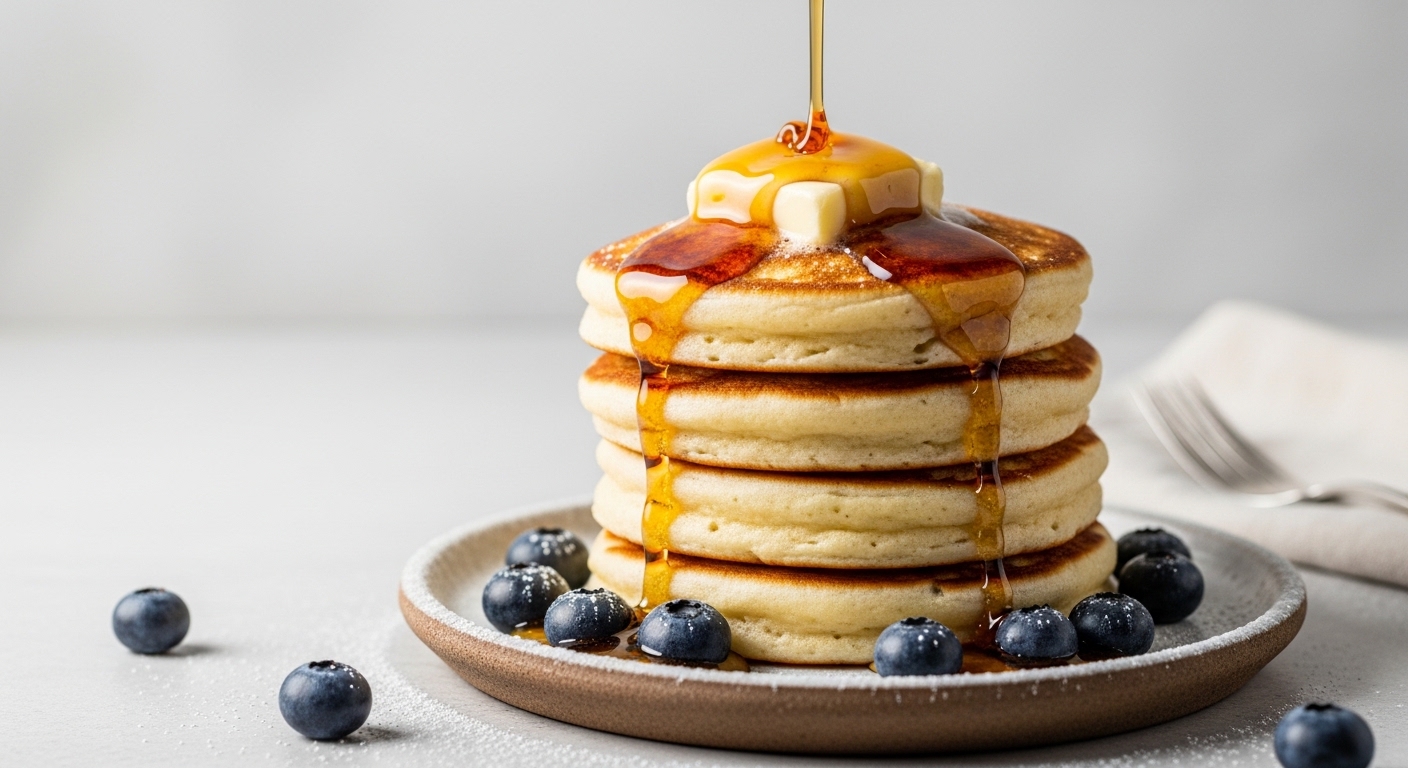
Stop throwing away sourdough discard. These easy sourdough discard recipes turn leftover starter into pancakes, crackers, muffins & more in minutes.
Introduction
Most people throw their sourdough discard straight into the trash — and every single one of them is wasting the most flavorful ingredient in their kitchen. That tangy, fermented starter sitting in your jar isn’t garbage. It’s gold.
You’ve been feeding your starter faithfully, scraping out the discard, and dumping it without a second thought. Maybe you tried one recipe, it came out flat and bland, and you gave up. That’s not a you problem — that’s a recipe that didn’t respect what sourdough discard actually does.
These sourdough discard recipes were built differently. Every single one uses that fermented tang as a flavor weapon — not something to mask or hide. Crispy crackers, fluffy pancakes, tender muffins. Real results. Zero waste. Starting right now.
Quick Answer
The best sourdough discard recipes include pancakes, crackers, banana muffins, pizza dough, and waffles. Each recipe uses unfed sourdough discard directly from the fridge — no waiting, no extra fermentation needed. The discard adds tang, depth, and a slight chew that store-bought versions simply can’t replicate. Most recipes are ready in under 30 minutes.
Why You’ll Love These Recipes
- Zero waste, maximum flavor. Every recipe on this list uses discard straight from the jar — no feeding required, no timing windows to hit. The fermented tang that makes sourdough bread so complex works the same magic in pancakes, crackers, and muffins without any extra effort.
- Faster than any recipe you’ve tried before. Because the discard is already fermented, you skip the long rise times that standard bread recipes demand. Mix, cook, done — most of these come together in under 30 minutes from jar to table.
- The flavor is genuinely different. Sourdough discard adds a layered, slightly sour depth that you simply can’t get from baking powder or commercial yeast alone. Every bite has a complexity that makes people ask what you did differently — and the answer is simpler than they’d expect.
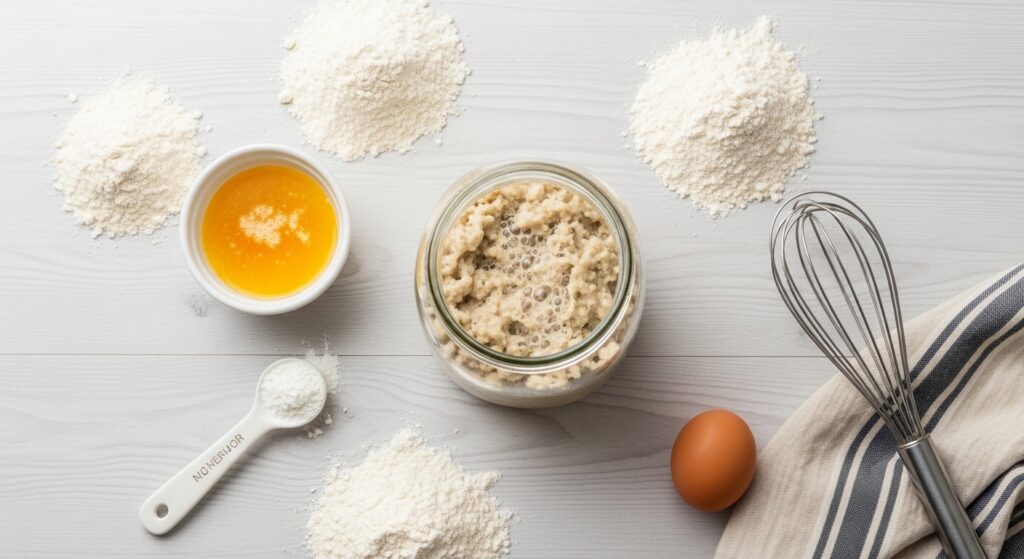
Ingredients List
For Sourdough Discard Pancakes (Base Recipe):
Dry Ingredients:
- All-purpose flour — 1 cup (125g)
- Baking powder — 1 tsp
- Baking soda — ½ tsp
- Sugar — 1 tbsp
- Salt — ½ tsp
Wet Ingredients:
- Sourdough discard — 1 cup (240g), straight from the fridge
- Egg — 1 large
- Milk — ½ cup (120ml)
- Butter, melted — 2 tbsp
- Vanilla extract — 1 tsp
Toppings / Optional Add-ins:
- Fresh blueberries or sliced banana
- Maple syrup
- Whipped butter
- Chopped walnuts
- Lemon zest for brightness
- Greek yogurt instead of sour cream
Every ingredient here pulls its weight — and the discard does the heavy lifting on flavor so nothing else has to.
Ingredient Notes & Smart Swaps
Sourdough Discard: Use it cold, straight from the fridge — don’t bring it to room temperature first. Cold discard is thicker and holds air better when mixed, which gives you a fluffier pancake with more structure. Discard that’s been sitting for up to two weeks still works perfectly; the flavor just gets slightly more sour, which most people actually prefer.
All-Purpose Flour: Swap half the all-purpose flour for whole wheat flour if you want a nuttier, denser pancake with more fiber. The whole wheat absorbs liquid slightly faster, so add an extra tablespoon of milk to keep the batter at the right consistency — it should pour slowly, not run off the spoon like water.
Milk: Full-fat milk gives the richest result, but oat milk or almond milk works identically here. The discard already provides enough fat and structure that the type of milk doesn’t dramatically change the outcome — which makes this one of the most dairy-free-friendly recipes in any baker’s rotation.
Butter: Brown the butter before adding it to the batter. It takes 90 extra seconds and adds a nutty, almost caramel-like depth that pairs unexpectedly well with the sour tang of the discard. Most recipes skip this entirely — don’t.
Step-by-Step Instructions
1. Pull the Discard Straight from the Fridge Measure out one cup of cold sourdough discard directly into a large mixing bowl. It should smell sharply tangy — almost like yogurt with a yeasty undertone. If it smells like acetone or nail polish remover, it’s gone too far and needs to be discarded.
(Pro Tip: Give the discard a quick stir before measuring — the liquid and solids sometimes separate in the fridge, and mixing them back together gives you a more consistent batter.)
2. Mix the Dry Ingredients Separately Whisk flour, baking powder, baking soda, sugar, and salt together in a separate bowl until evenly combined. The dry mix should look uniform and pale — no clumps of baking soda hiding at the bottom, which would cause uneven rising and bitter spots in the finished pancake.
3. Combine Wet Ingredients Add the egg, milk, melted butter, and vanilla extract directly into the bowl with the discard. Whisk until just combined — the mixture will look slightly lumpy and that’s completely correct. A smooth batter has been overworked, and overworked batter makes tough, flat pancakes.
(Warning: Don’t let the batter sit longer than 10 minutes before cooking. The baking soda reacts with the discard’s acid immediately — delay too long and you lose the lift that makes these pancakes fluffy.)
4. Fold in the Dry Ingredients Pour the dry ingredients into the wet bowl and fold gently with a spatula — ten to twelve folds maximum. Stop when you still see a few streaks of flour. The batter should look thick, slightly lumpy, and almost too rough. That roughness is exactly right.
(Pro Tip: Rest the batter for exactly 3 minutes before cooking — not longer. This short rest lets the flour hydrate fully without killing the rise from the leavening.)
5. Cook on a Hot Pan Heat a cast iron skillet or non-stick pan over medium heat — 350°F (175°C) if you have an electric griddle. Add a small knob of butter and let it foam and settle before adding batter. Pour about ⅓ cup per pancake. The edges will look matte and set, and small bubbles will appear across the surface — that’s your signal to flip. Cook the second side for 60-90 seconds until deep golden underneath.
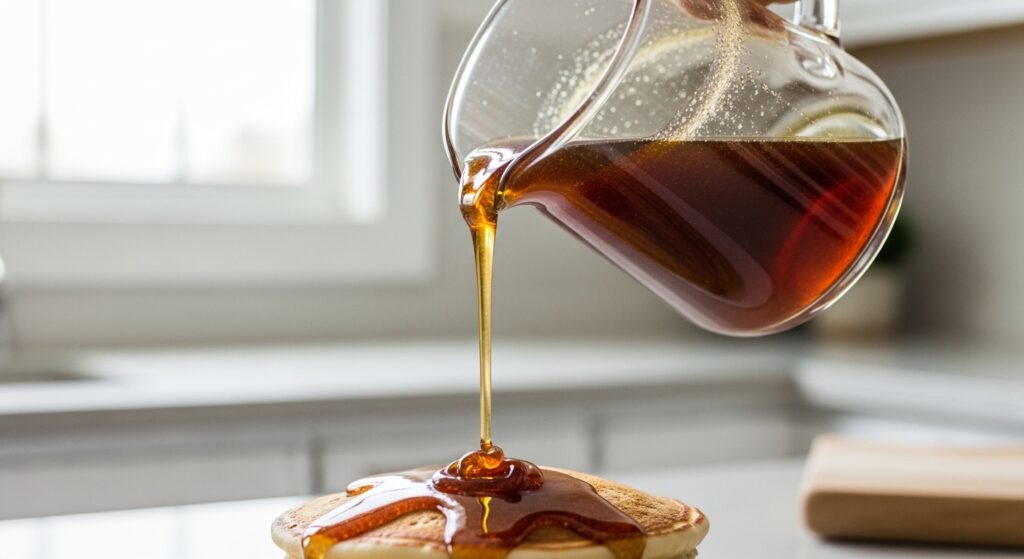
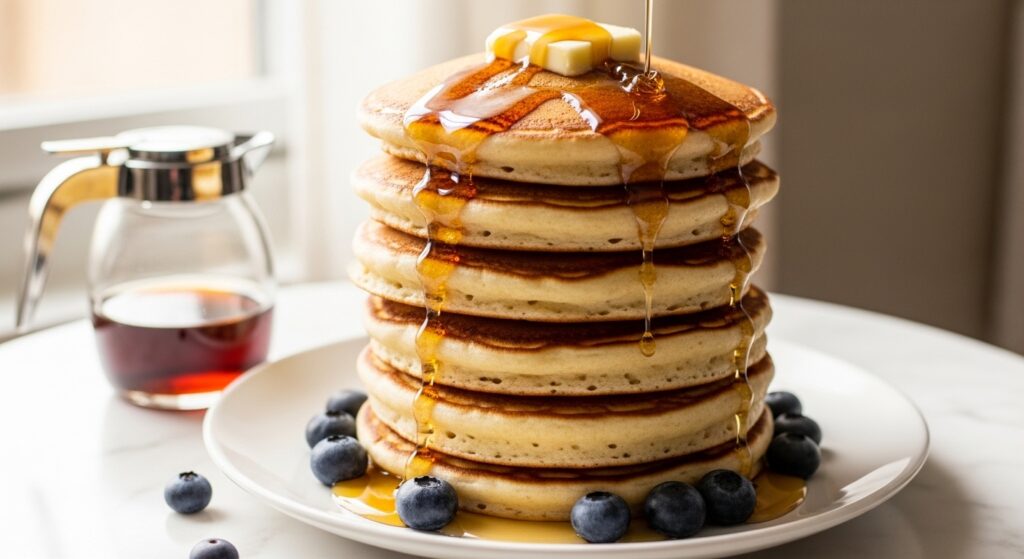
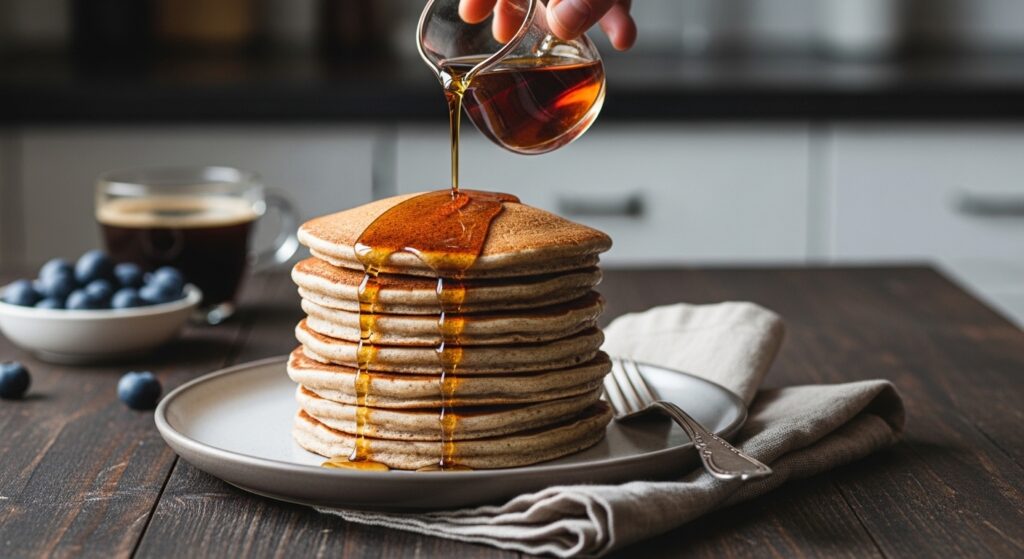
6. Serve Immediately Stack and serve straight from the pan. The edges should be slightly crisp, the center soft and springy when pressed. A drizzle of maple syrup, a pat of cold butter melting into the stack — done.
Pro Tips for Perfect Results
Rest the Batter — But Only Briefly Three minutes is the sweet spot between hydrated flour and dead leavening. Longer than five minutes and the baking soda has already spent its reaction — the pancakes won’t rise properly and come out dense and flat.
Use a Cold Pan Test Drop a tiny splash of water onto the pan before adding butter. If it evaporates in under two seconds, the pan is too hot — back it off slightly. If it sits for three seconds, it’s perfect. This test takes five seconds and prevents burned exteriors with raw centers every single time.
Don’t Press the Pancakes Pressing down with a spatula after flipping crushes the air pockets that the leavening just created. Those pockets are what makes the texture light. Leave the pancake completely alone for the full 90 seconds after flipping — the result speaks for itself.
Common Mistakes to Avoid
Overmixing the Batter This is the most common reason sourdough discard pancakes come out rubbery and dense. Overmixing develops gluten aggressively, turning what should be a tender crumb into something closer to a chewy flatbread. Fold only until the dry streaks disappear — then stop immediately, no matter how lumpy it looks.
Using Discard That’s Too Old Discard older than two weeks starts producing acetic acid at levels that make the final product genuinely unpleasant — sharp, almost vinegary, with a metallic aftertaste. Two weeks in the fridge is the hard limit. Smell it first: tangy and yeasty is good, harsh and chemical is not.
Cooking on Low Heat Low heat dries the pancake out before the center sets, leaving you with a pale, rubbery disc instead of a golden, fluffy one. Medium heat creates that caramelized crust in the exact time it takes for the center to cook through. If your pancakes look pale after two minutes, turn the heat up — don’t wait longer.
Variations & Substitutions
Sourdough Discard Crackers Replace all wet ingredients except the discard with 2 tablespoons of olive oil and ½ teaspoon of salt — no egg, no milk needed. The discard’s natural gluten structure holds the cracker together during baking, and the fermentation gives it a complexity that store-bought crackers can’t touch. Bake at 350°F (175°C) for 20-25 minutes until deeply golden and completely crisp.
Vegan Sourdough Discard Pancakes Swap the egg for one tablespoon of ground flaxseed mixed with three tablespoons of water, rested for five minutes until gel-like. The flax egg binds the batter almost identically to a chicken egg because both work through protein coagulation during cooking — the texture difference is minimal and most people can’t tell.
Sourdough Discard Banana Muffins Add two mashed ripe bananas and reduce the milk to two tablespoons. The banana provides enough moisture and natural sugar that you can cut the added sugar by half without losing any sweetness — and the combination of banana and sourdough tang creates a depth of flavor that standard banana muffins simply don’t have.
What to Serve With It
Crispy Bacon or Turkey Sausage — The salt and fat cut directly through the tang of the discard, creating a savory-sour balance that makes both taste sharper and more defined.
Fresh Berry Compote — Warm berries with a touch of lemon juice amplify the sourdough’s natural acidity rather than fighting it, making the tang taste intentional and bright instead of sharp.
To Drink: Black coffee pairs best — the bitterness balances the tang without competing with it. For a non-caffeinated option, fresh orange juice alongside sourdough discard pancakes is a genuinely underrated combination.
Best Occasion: Weekend brunch, Sunday meal prep batch cooking, or any morning when you’re feeding the starter and refuse to throw anything away.
Storage & Reheating Instructions
Refrigerator: Store cooked pancakes in a single layer in an airtight container for up to 4 days. Stack them only after they’ve cooled completely — stacking warm pancakes traps steam and makes them soggy within an hour.
Freezer: Freeze in a single layer on a baking sheet first, then transfer to a zip-lock bag once solid. This prevents them from fusing together and lets you pull out exactly one or two at a time without thawing the whole batch.
Reheating Hack: Reheat frozen pancakes directly in the toaster on medium setting — not the microwave. The toaster restores the slightly crisp exterior that microwaving destroys entirely, and it takes 90 seconds instead of turning them into a limp, steamed disc.
Nutrition Facts (per serving — 3 pancakes)
| Nutrient | Amount |
|---|---|
| Calories | 310 kcal |
| Protein | 9g |
| Carbohydrates | 48g |
| Fats | 9g |
| Fiber | 2g |
| Sodium | 420mg |
| Key Vitamins/Minerals | Iron, Calcium, B Vitamins, Probiotics |
Based on 1 serving using whole milk and butter. Values are estimates. “All nutrition values are based on USDA food database.”
FAQs
Can I use sourdough discard straight from the fridge? Yes — and you should. Cold discard is thicker and more structured than room-temperature discard, which actually improves the texture of pancakes and crackers. There’s no need to let it warm up first. The baking powder and baking soda do all the leavening work regardless of the discard’s temperature when it hits the batter.
How old can sourdough discard be before it’s unusable? Up to two weeks in the fridge is the reliable window. Beyond that, acetic acid levels climb high enough to make the flavor genuinely harsh rather than pleasantly tangy. The smell test is your best guide — sharp and yeasty means it’s still good, chemical or nail-polish-like means it’s past its limit and should be thrown out.
Do sourdough discard recipes need extra yeast? No — not for quick recipes like pancakes, crackers, or muffins. These rely on baking powder and baking soda for lift, not fermentation. The discard contributes flavor and a slight chew, not rise. Only sourdough bread recipes that require an actual oven spring need additional yeast or a longer fermentation window.
Why do my sourdough discard pancakes come out flat? Flat pancakes almost always mean one of three things: the batter was overmixed, the leavening sat too long before hitting the pan, or the pan wasn’t hot enough. Mix minimally, cook within 10 minutes of mixing, and test the pan temperature with a water drop before adding batter. Fix all three and the problem disappears immediately.
Can I use sourdough discard in place of buttermilk? Yes — and it’s actually a superior swap. Sourdough discard has a similar acidity to buttermilk, which means it reacts with baking soda the same way and produces the same lift. The flavor is more complex than buttermilk because of the fermentation, which makes whatever you’re baking taste noticeably more interesting with zero extra effort.
Conclusion
You now have everything you need to stop wasting discard and start using it as the flavor asset it actually is. The move that changes everything? The toaster reheat trick — it’s the detail nobody talks about that makes leftover pancakes taste freshly made two days later. Try the base pancake recipe first, then work your way to the crackers. Drop your results in the comments — I want to know which one became your weekly staple. And if you’re already thinking ahead, the Sourdough Discard Banana Muffins recipe on this site uses the same jar and takes even less time.