
Now Reading: Best Chicken Salad Recipe (Creamy, Fresh & Packed with Flavor)
-
01
Best Chicken Salad Recipe (Creamy, Fresh & Packed with Flavor)

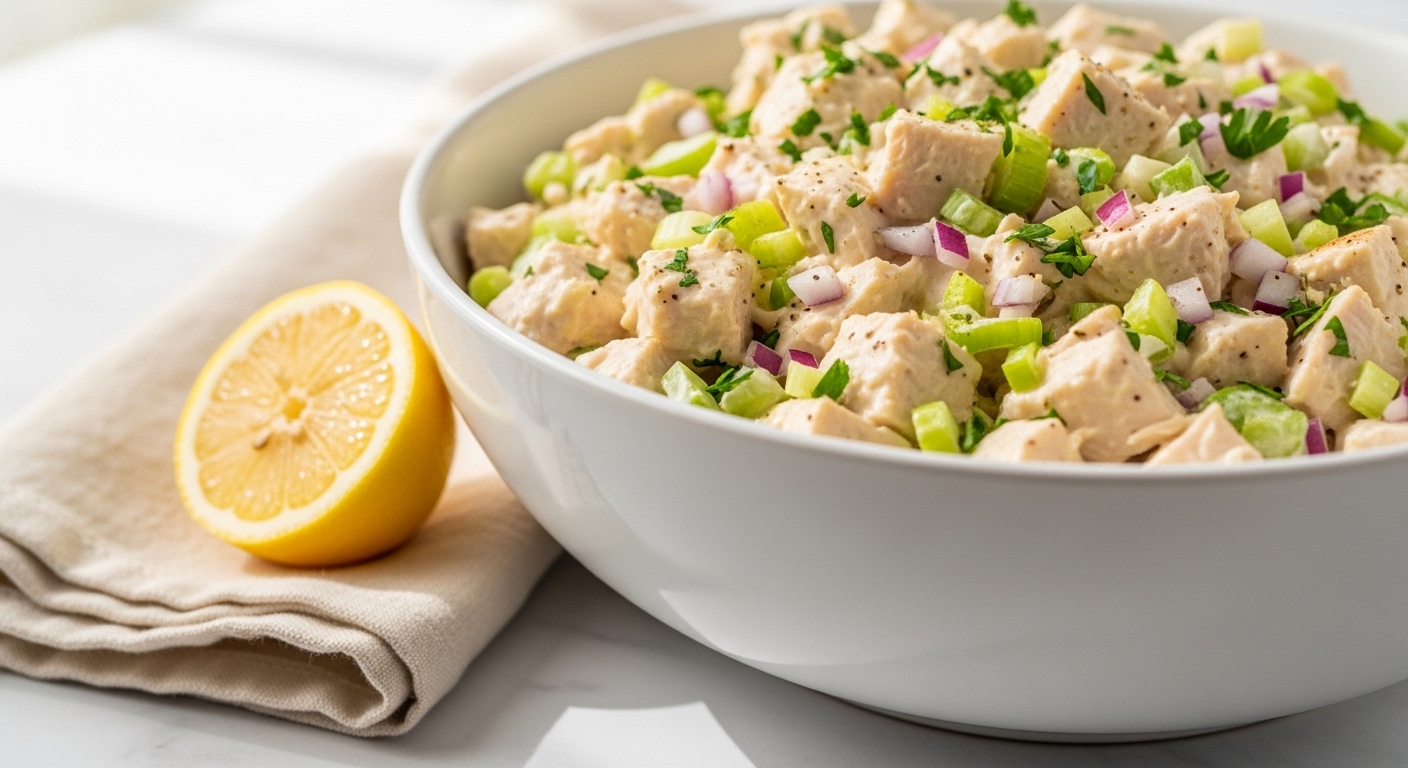
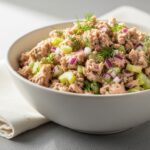
This Best Chicken Salad Recipe is creamy, fresh, and packed with flavor — tender chicken, crisp crunch, and balanced seasoning in every bite.
Introduction
Most chicken salads are bland, overly mayo-heavy, and turn watery by day two. That shouldn’t be normal. The Best Chicken Salad Recipe should always deliver vibrant flavor and appealing texture in every bite.
If your last attempt left you disappointed—lacking brightness, texture, and flavor—the issue is usually poor ratios and technique, not your effort.
This version delivers balanced creaminess, real crunch, well-seasoned chicken, and no sogginess. Mixing order matters, too—follow it for the best result.
With this approach, you’ll get chicken salad that stays creamy and fresh for days, and is satisfying to eat each time. Now, let’s fix chicken salad for good.
Quick Answer
For the quick answer: The Best Chicken Salad Recipe combines tender chopped chicken, crisp celery, balanced mayo, and fresh lemon for brightness. Season aggressively, chill properly, and fold gently to retain texture. The key is moisture control and sharp contrast—creamy, crunchy, savory, and fresh in every bite.
Why You’ll Love This Recipe
- Balanced Creaminess — The mayo coats the chicken rather than drowning it, so you taste the chicken first, not the sauce. The texture stays thick and spoonable even after two days in the fridge.
- Real Crunch and Freshness — Celery and red onion are cut small but deliberately, creating a crisp contrast in every bite. That crunch keeps the salad from feeling heavy or flat.
- Meal-Prep Friendly — This chicken salad holds its structure without turning watery, avoiding a common pitfall with other recipes. Make it once, and you’ve got lunches handled for three days straight.
Ingredients List
Dry Ingredients
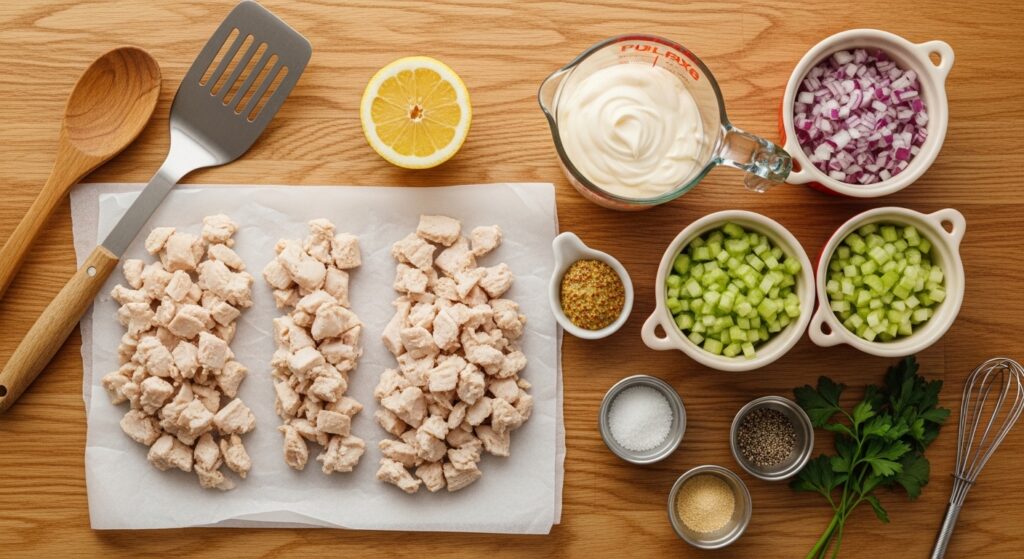
Kosher salt — 1 teaspoon (5 g)
Black pepper — ½ teaspoon (2 g)
Garlic powder — ½ teaspoon (2 g)
Wet Ingredients
Cooked chicken breast, chopped — 3 cups (420 g)
Mayonnaise — ¾ cup (180 ml)
Fresh lemon juice — 1½ tablespoons (22 ml)
Dijon mustard — 1 teaspoon (5 ml)
Toppings / Add-ins
Celery, finely diced — ½ cup (60 g)
Red onion, very finely minced — 3 tablespoons (30 g)
Fresh parsley, chopped — 2 tablespoons (8 g)
Nothing fancy here—just the right balance setting up each ingredient.
Ingredient Notes & Smart Swaps
Chicken: Rotisserie works, but don’t use it straight from the fridge. Cold chicken doesn’t absorb seasoning well — let it sit out 15 minutes first.
Mayonnaise: Use full-fat. Everyone says light mayo is fine — that’s wrong. Lower fat releases more water, making the salad loose after chilling.
Lemon Juice: Fresh only. Bottled tastes sharp and metallic, and you’ll notice it immediately in a cold dish like this.
Celery: Dice it small — about pea-sized. Big chunks throw off texture balance and make each bite awkward.
Swap Option: For more tang and extra protein, Greek yogurt can replace up to half the mayo. Don’t replace all of it—yogurt alone gets chalky once chilled.
Step-by-Step Instructions
- Start with cooked chicken completely cooled but not ice-cold. Chop into small, even pieces — about ½-inch cubes — so every bite feels consistent.
- Add mayo, lemon juice, Dijon, salt, pepper, and garlic powder to a large bowl, whisking until the mixture is completely smooth and slightly glossy. You’re looking for a thick, creamy base that slides off the spoon slowly. (Pro Tip: Taste now — seasoning cold food later is harder.)
- Add chopped chicken to the bowl. Fold gently with a spatula, lifting from the bottom instead of stirring aggressively — you don’t want shredded paste.
- This is where most people mess up: add celery and onion last to avoid excess moisture thinning the dressing. Ignore this, and your salad gets watery fast.
- Fold in parsley and adjust salt. It should taste slightly over-seasoned at room temperature because chilling dulls flavor. (Pro Tip: Add an extra tiny squeeze of lemon — trust me.)
- Cover and chill at 38°F (3°C) for at least 1 hour. The texture firms up, flavors blend, and the salad becomes thick and cohesive instead of loose.
Pro Tips for Perfect Results
Season in Layers — Salt the chicken lightly before mixing, then adjust after combining. Layered seasoning prevents flat flavor.
Let It Rest — Chill for at least 1 hour, or even better, 2. The dressing tightens and coats every cube evenly for a superior bite.
Dice Small, Not Large — Big chunks seem rustic, but they ruin balance. Smaller pieces create better distribution and smoother bites.
Common Mistakes to Avoid
Overloading Mayo — More isn’t better. Too much mayo masks flavor and creates a greasy texture; measure exactly ¾ cup.
Skipping Acid — Without lemon or mustard, the salad tastes heavy. Acid cuts fat and sharpens everything.
Mixing While Warm — Warm chicken releases steam, which creates condensation and thins the dressing. Let it cool properly first.
Variations & Substitutions
Avocado Chicken Salad: Swap out half the mayo for mashed ripe avocado instead. It works because avocado provides fat and structure while adding freshness.
Vegan Version: Use chopped chickpeas and vegan mayo. Chickpeas mimic chicken texture and absorb seasoning surprisingly well.
Cranberry Almond Twist: Add ¼ cup dried cranberries and 2 tablespoons toasted almonds. Sweet-tart contrast plus crunch completely transforms the flavor balance.
What to Serve With It
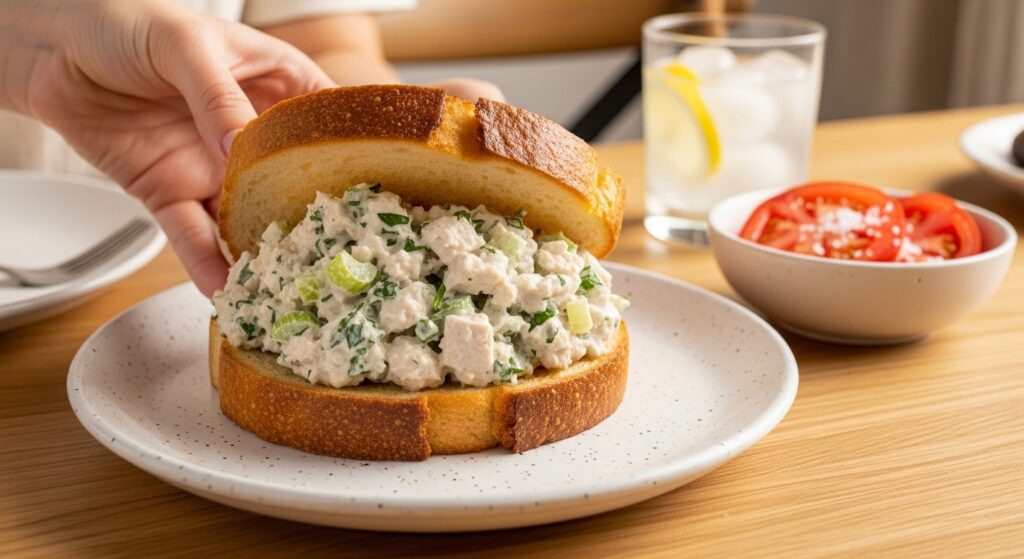
Pile it onto toasted sourdough for structure and crunch. Spoon it into lettuce cups for a lighter option. Serve alongside sliced tomatoes with flaky salt. Iced tea or lemon sparkling water on the side keeps every bite tasting clean and fresh. Great for picnics, work lunches, or casual weekend hosting.
Storage & Reheating Instructions
Lock it in an airtight container and refrigerate — it stays good for up to 3 days. Press a sheet of plastic wrap directly onto the surface before putting the lid on, and you’ll stop that annoying moisture buildup before it even starts.
To freeze, skip adding celery and onion for now, then freeze the base mixture for up to 2 months. After thawing overnight, add fresh crunch before serving.
No reheating needed, of course. If the salad firms up too much, stir in exactly 1 tablespoon warm water—no more—to loosen the texture without adding grease.
Nutrition Facts (per serving)
Nutrient | Amount
Calories | 320
Protein | 28 g
Carbohydrates | 4 g
Fats | 22 g
Fiber | 1 g
Sodium | 480 mg
Key Vitamins/Minerals | Vitamin B6, Niacin, Selenium
FAQs
How do I keep chicken salad from getting watery?
Let the chicken cool fully before mixing, and add crunchy vegetables last. Moisture release is the main culprit. Also, full-fat mayo stabilizes better than reduced-fat versions, which separate after chilling.
How Far Ahead Can You Actually Make Chicken Salad?
Yes — and it actually improves after one to two hours in the fridge. The flavors blend, and the dressing thickens slightly, creating a better texture and stronger taste.
What’s the best chicken to use?
Poached or roasted breast works best because it stays firm and neutral in flavor. Overcooked chicken becomes stringy and absorbs too much dressing.
Can I use canned chicken?
You can, but drain it extremely well and pat dry with paper towels. Excess liquid will thin your dressing fast.
How long does chicken salad last?
It keeps safely for about 3 days refrigerated at 38°F (3°C). Beyond that, the texture declines even if it still smells fine.
Conclusion
Creamy but not drowning. Fresh but not watery. Balanced — finally. That ¾ cup mayo ratio and the “add crunch last” step make all the difference.
After chilling, taste your salad and notice how the texture actually holds up. The difference is clear.
And when someone asks for the recipe—because they will—send them here. Next, try a variation or tweak the acid level to suit your taste.
Now go fix your chicken salad for good.















Pingback: Best Creamy Cucumber Salad Recipe (Fresh, Crunchy & Ready in 10 Minutes)