Now Reading: Best Mashed Potatoes Recipe (Creamy, Fluffy & Buttery Smooth)
-
01
Best Mashed Potatoes Recipe (Creamy, Fluffy & Buttery Smooth)

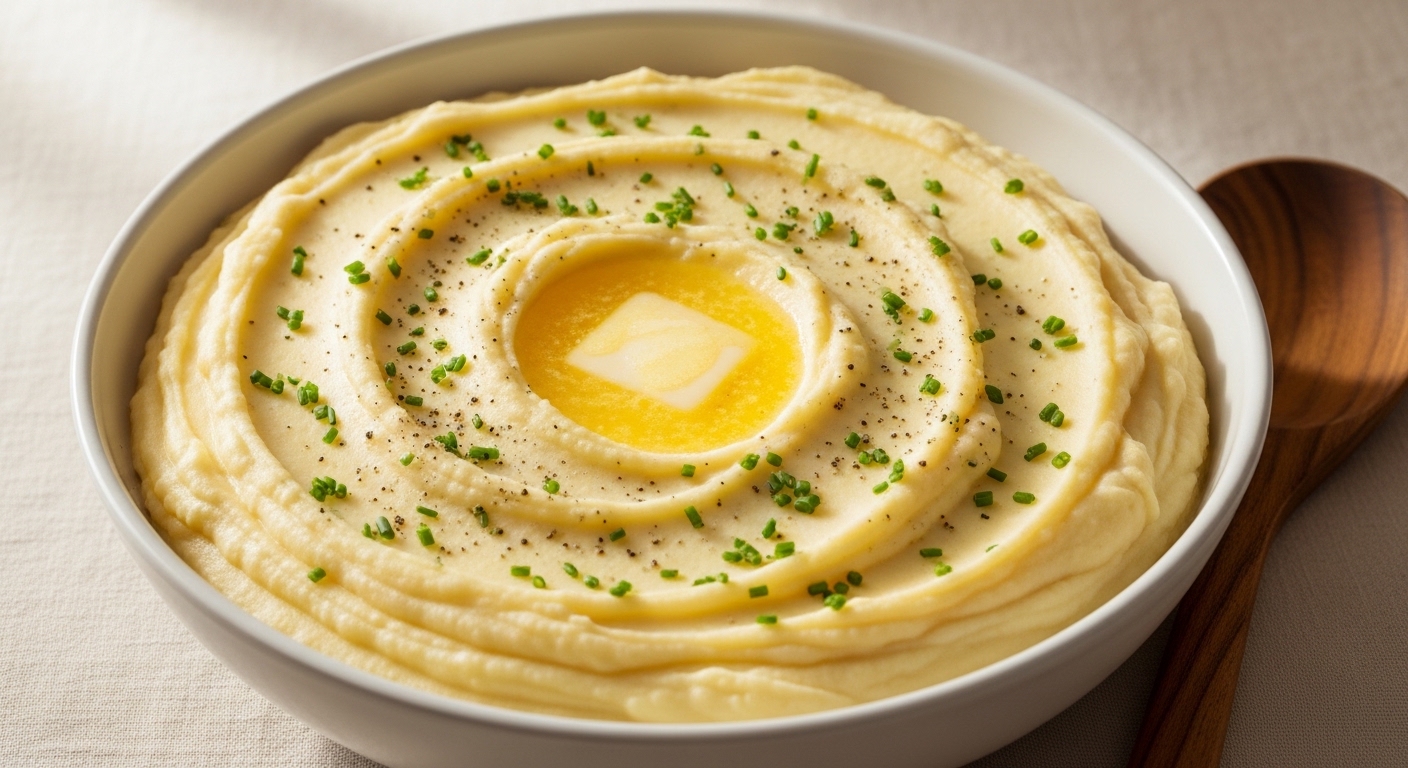
This Best Mashed Potatoes Recipe delivers creamy, fluffy, buttery smooth texture with foolproof steps for rich flavor every time.
Introduction
Gluey mashed potatoes are everywhere — and most recipes are to blame. One wrong move and you’re stuck with a sticky, bland bowl of disappointment.
You boiled them. You mashed them. And somehow they still turned dense or watery. That’s not your fault — that’s bad technique.
This Best Mashed Potatoes Recipe fixes it at the root. The right potatoes. The right heat. The right mixing method. You’ll get creamy, fluffy, buttery smooth potatoes that melt on your tongue — not paste that fights back. And once you understand why it works, you’ll never ruin a batch again.
Ready to stop guessing?
Quick Answer
The Best Mashed Potatoes Recipe uses starchy potatoes, warm butter, and hot cream, mashed gently to prevent a gluey texture. Boil until fork-tender, drain thoroughly, then mash without overworking. The result is creamy, fluffy, and buttery smooth every time.
Why You’ll Love This Recipe
- Unbelievably Creamy Texture
Proper potato selection and gentle mashing prevent excess starch release. You get light, airy potatoes instead of heavy paste. - Rich But Balanced Flavor
Warm butter and cream absorb evenly into hot potatoes. Every bite tastes buttery without feeling greasy. - Consistent Foolproof Results
Temperature control and timing eliminate guesswork. You’ll know exactly when to stop mashing — and that’s everything.
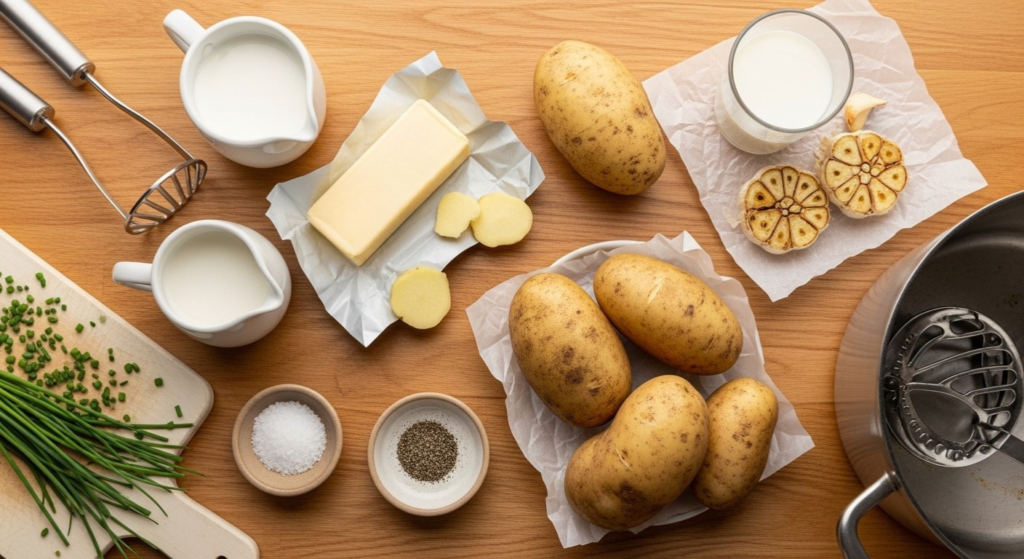
Ingredients List
Dry Ingredients
- Kosher salt — 1 tablespoon (15g), plus more to taste
- Black pepper — ½ teaspoon (1g)
Wet Ingredients
- Russet or Yukon Gold potatoes — 3 pounds (1.4kg)
- Unsalted butter — ½ cup (113g), warmed.
- Heavy cream — ¾ cup (180ml), heated
- Whole milk — ¼ cup (60ml), warmed
Optional Add-Ins
- Roasted garlic — 2 cloves, mashed
- Fresh chives — 2 tablespoons, chopped
- Cream cheese — 2 ounces (56g) for extra richness
Use quality butter here — you’ll taste the difference immediately.
Ingredient Notes & Smart Swaps
Russet potatoes create the fluffiest texture because of their high starch content — they break down easily when mashed. Yukon Golds deliver creamier, naturally buttery flavor with slightly denser structure.
Unsalted butter allows you to control seasoning precisely. Salted butter works, but reduce added salt slightly to avoid imbalance.
Heavy cream adds richness and silkiness when heated before mixing. Half-and-half can substitute, though the texture becomes slightly lighter and less decadent.
Whole milk loosens the mash gently. For dairy-free options, use warm unsweetened almond milk and olive oil — the fat compensates for missing butter.
Step-by-Step Instructions
- Peel and cut potatoes evenly.
Cut into 1½-inch chunks for uniform cooking. Uneven pieces cook at different speeds — that’s how you get lumps. - Start in cold salted water.
Add potatoes to a large pot and pour in enough cold water to cover them by 1 inch. Add 1 tablespoon of salt. Because starting cold ensures even cooking from center to edge. - Boil gently at medium heat.
Bring to a steady simmer, not a violent boil. Cook 15–20 minutes until the fork slides in easily and the edges look slightly fuzzy. - Drain thoroughly.
Pour into a colander and let steam escape for 5 minutes. (Pro Tip: Excess moisture causes watery mash.) - Return to the hot pot briefly.
Place drained potatoes back into the warm pot over low heat for 1 minute. You’ll see light steam rise — that’s moisture evaporating. - Mash gently.
Use a potato masher or ricer. Press just until smooth. (Warning: Overmixing activates starch and creates a gluey texture.) - Add warm butter first.
Pour in warmed butter and fold gently. The potatoes absorb fat before liquid — this step locks in creaminess. - Add hot cream and milk gradually.
Stir slowly until the desired consistency forms. The texture should look fluffy, glossy, and soft — not runny. - Season and rest briefly.
Add pepper and adjust salt. Let it sit 2 minutes before serving so flavors settle evenly.
Feel that spoon glide through? That’s the texture you want.
Pro Tips for Perfect Results
Warm Your Dairy
Cold milk drops in temperature instantly, stiffening its texture. I always heat butter and cream first — it blends smoothly without shock.
Use a Ricer for Ultra-Smooth Mash
A ricer creates fine strands without overworking starch. It’s the fastest way to achieve restaurant-level fluffiness.
Stop Before It Looks Perfect
Potatoes continue to loosen slightly as they sit. I stop mixing when it looks slightly thicker than desired — it settles beautifully.
Common Mistakes to Avoid
Overboiling Potatoes
Rapid boiling breaks potatoes unevenly and waterlogs them. Keep the heat steady and moderate.
Using a Blender or Food Processor
High-speed blades release too much starch. That’s how you end up with a glue-like texture.
Adding Cold Liquid
Cold dairy stiffens mash instantly. Always warm it before mixing for smoother results.
Variations & Substitutions
Garlic Mashed Potatoes
Add roasted garlic to the mash. Roasting mellows sharpness and adds sweet depth without overpowering texture.
Vegan Mashed Potatoes
Swap butter for olive oil and use warm plant milk. The fat ensures creaminess while maintaining fluffy consistency.
Cream Cheese Version
Blend in 2 ounces of cream cheese for extra body. The added protein stabilizes the structure and prevents separation.
What to Serve With It
Serve alongside roast chicken for classic comfort.
Pair with steak and pan sauce — potatoes soak up every drop.
Add green beans for freshness.
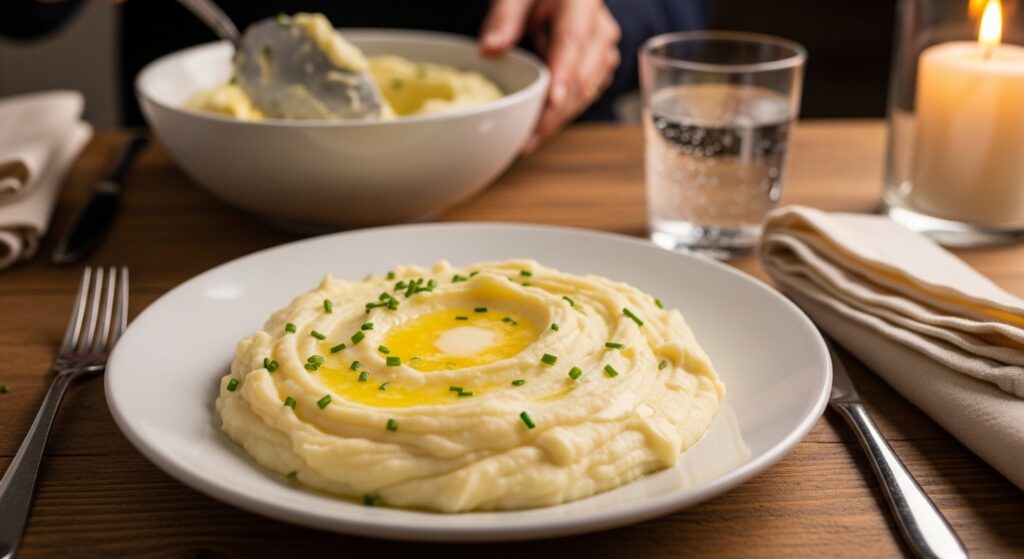
Drink pairing? Try sparkling water or a crisp white wine. Ideal for holiday dinners or Sunday meals.
Storage & Reheating Instruction
Spoon into an airtight container, press a sheet of plastic wrap flat against the surface to lock in moisture, and refrigerate for up to 4 days.
Freeze in portioned containers up to 2 months. Warm slowly over low heat, stirring in a small splash of warm milk to revive it. Secret trick — stir in a teaspoon of butter at the end to restore shine and silkiness.
Nutrition Facts (per serving)
| Calories | 310 |
| Protein | 6g |
| Carbohydrates | 38g |
| Fats | 15g |
| Fiber | 3g |
| Sodium | 420mg |
| Key Vitamins/Minerals | Potassium, Vitamin C, Calcium |
FAQs
Why are my mashed potatoes gluey?
A gluey texture occurs when potatoes are overmixed or blended at high speed. Excess starch gets activated, creating a sticky consistency. Always mash gently by hand or use a ricer. Stop mixing as soon as it’s smooth —overworking is the main culprit.
Should I peel potatoes before boiling?
Peeling creates a smoother texture, especially for formal meals. Leaving skins on adds rustic texture and nutrients. If keeping skins, scrub thoroughly and expect a slightly chunkier mash.
What potatoes are best for mashed potatoes?
Russets create a fluffy texture due to high starch content. Yukon Golds produce creamier, naturally buttery results. Avoid waxy potatoes — they stay firm and don’t mash smoothly.
Can I make mashed potatoes ahead of time?
Yes, but keep them warm in a covered dish over low heat. Stir occasionally and add warm milk if the mixture thickens. They hold well for about 1 hour without losing texture.
How do I fix watery mashed potatoes?
Return them to low heat and stir gently to evaporate excess moisture. Stirring in a tablespoon of cream cheese can also help hold the texture together without making it too thick.s
Conclusion
Great mashed potatoes aren’t luck — they’re science and timing. Warm dairy, gentle mashing, and proper resting create the creamy, fluffy, buttery-smooth texture you want.
Try this Best Mashed Potatoes Recipe tonight and taste the difference immediately. Then tell me — did your spoon glide through like silk? Drop a comment, share your results, and explore another comfort classic next.