Now Reading: Best Homemade Caesar Salad Dressing (Creamy, Garlicky & Ready in 5 Minutes)
-
01
Best Homemade Caesar Salad Dressing (Creamy, Garlicky & Ready in 5 Minutes)

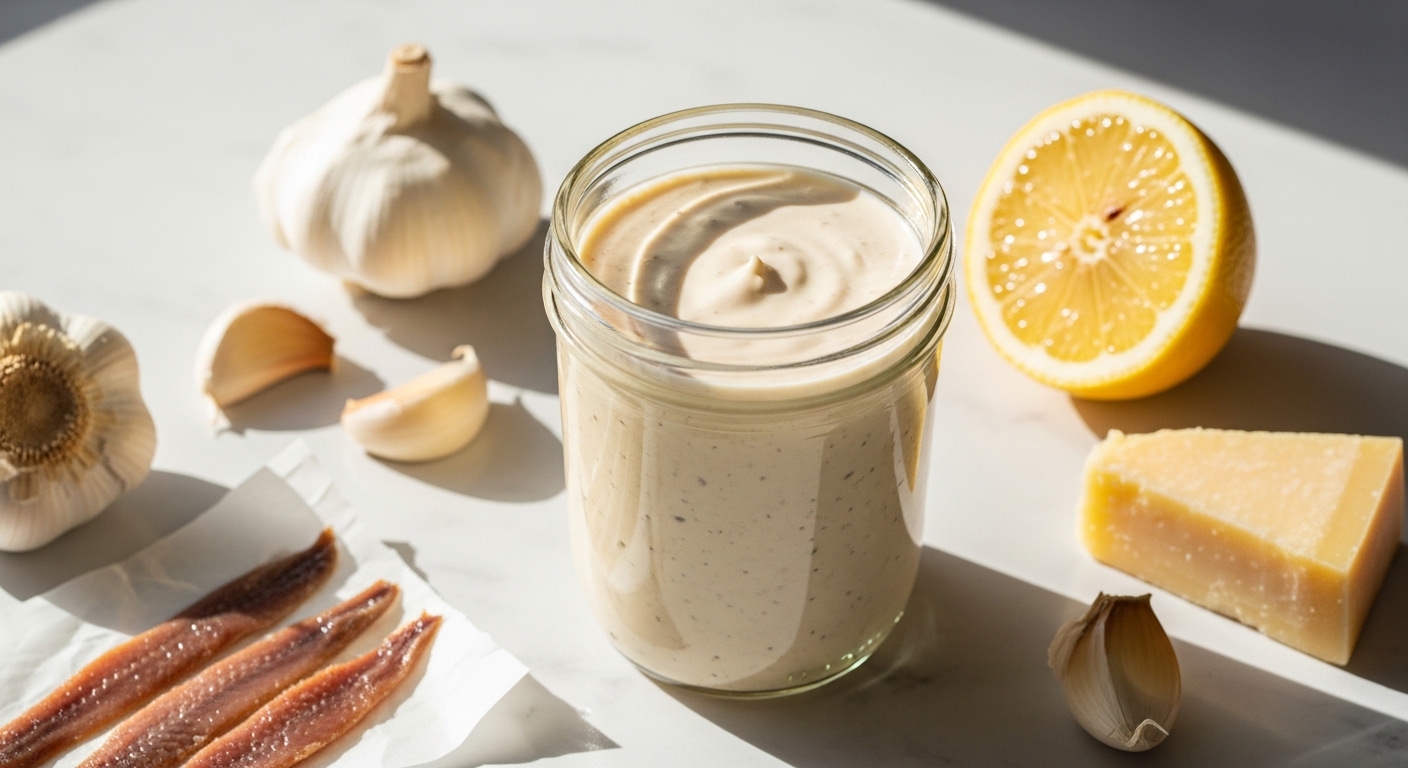
Make the best homemade Caesar salad dressing in just 5 minutes — creamy, garlicky, and bold. No blender needed. Better than any bottle on the shelf.
Introduction
Most Caesar dressings disappoint: watery, bland, and full of preservatives—a bottle can’t replace real ingredients.
You’ve used store-bought dressing and wondered why it tastes bland. Homemade attempts came out thin and flavorless. It’s not your fault—it’s a shortcut issue.
This dressing solves those problems: it’s thick and garlicky, and it coats every leaf just right. Five minutes. One bowl. No excuses.
Quick Answer
The best homemade Caesar salad dressing combines anchovies, fresh garlic, egg yolk, Dijon mustard, lemon juice, Worcestershire sauce, Parmesan, and olive oil — blended into a rich, velvety emulsion. No blender required. It’s bold, garlicky, and ready in 5 minutes flat.
Why You’ll Love This Recipe
- It comes together in one bowl—no equipment. Just a whisk and 5 minutes for the best Caesar dressing you’ve tasted.
- The flavor’s complex, not flat. Anchovies add depth, lemon brightens, and Dijon ties it all together like no bottled version.
- It stays fresh for a week in the fridge. Make it on Sunday and use it for salads, wraps, chicken, or as a dip throughout the week.
Ingredients List
Base Ingredients:
- Garlic cloves — 2 large (finely minced or grated)
- Anchovy fillets — 3 fillets (15 g), packed in oil
- Egg yolk — 1 large, room temperature
- Dijon mustard — 1 teaspoon (5 g)
- Fresh lemon juice — 2 tablespoons (30 ml)
- Worcestershire sauce — 1 teaspoon (5 ml)
Wet Ingredients:
- Extra virgin olive oil — ⅓ cup (80 ml)
- Neutral oil (like avocado or canola) — 2 tablespoons (30 ml)
Finishing Ingredients:
- Freshly grated Parmesan — ¼ cup (25 g)
- Black pepper — ½ teaspoon (2 g), freshly cracked
- Salt — to taste
These ingredients are basic—but how you mix them changes everything.
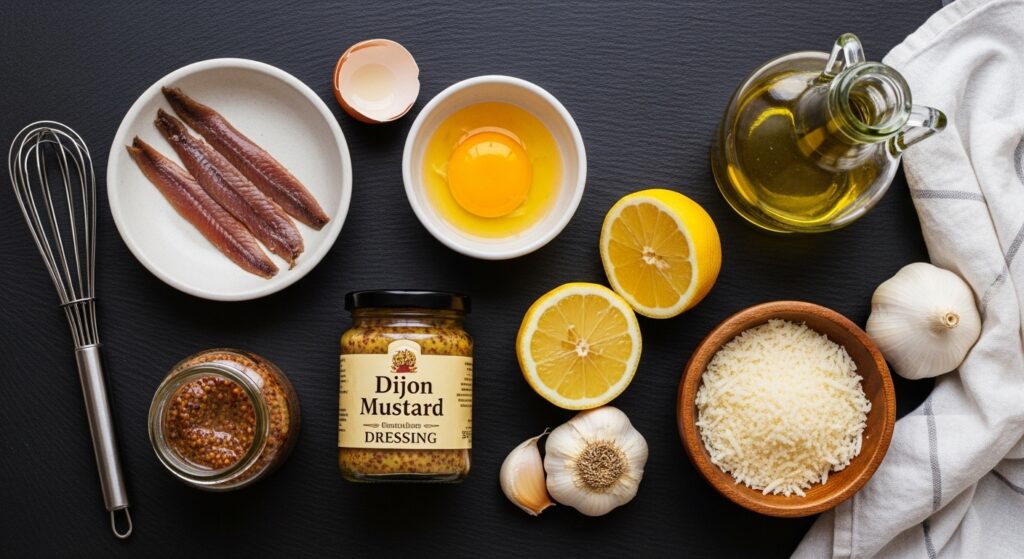
Ingredient Notes & Smart Swaps
Anchovies: Don’t skip them — they don’t make the dressing taste fishy. They dissolve completely, adding a deep, savoury backbone that’s impossible to replicate. If you’re avoiding fish, a teaspoon of white miso paste gets surprisingly close.
Egg Yolk: This is what creates the thick, glossy emulsion. Room temperature yolk blends far more smoothly than cold — pull it out 15 minutes before you start. For a fully egg-free version, 2 tablespoons of mayonnaise can be used as a direct swap.
Parmesan: Use freshly grated, not the pre-shredded kind from a bag. Pre-shredded contains anti-caking agents that make the dressing grainy instead of silky smooth.
Bottled lemon juice tastes flat. Fresh lemon, with its oils and sharp acidity, makes a big difference in flavor.
Step-by-Step Instructions
- Smash garlic and anchovies into a paste, pressing with your knife. It should smell sharp and savory. (Pro Tip: A pinch of salt speeds this up.)
- Whisk together the paste, egg yolk, Dijon, lemon juice, and Worcestershire. The mixture will look pale yellow and slightly foamy — that’s exactly right. Whisk hard for about 30 seconds until everything is fully combined and uniform.
- Add the oils — slowly. Start with just a few drops at a time, whisking constantly. You’ll see the mixture thicken and turn glossy as the emulsion forms. (Warning: Pour the oil too fast and the dressing will break — you’ll end up with a greasy, separated mess instead of a creamy dressing.)
- Once half the oil is in, pour the rest in a thin stream, whisking. The dressing should coat a spoon and stay thick. (Pro Tip: If too thick, add a teaspoon of cold water to loosen without thinning the flavor.)
- Fold in Parmesan and pepper. Taste—adjust salt and lemon as needed. The dressing should be bold, tangy, and garlicky.
Pro Tips for Perfect Results
Use Two Oils — Not One. Pure olive oil can turn bitter when whisked aggressively. Blending it with a neutral oil, such as avocado or canola, keeps the flavour balanced and smooth without sacrificing richness.
Grate garlic, don’t chop. Grated garlic releases more allicin, delivering intense flavor.
Cold Dressing = Thicker Dressing. Refrigerate for at least 20 minutes before serving. As it chills, the emulsion tightens, and the flavours meld — the dressing you taste straight from the bowl is noticeably different from the one that’s had time to rest.
Common Mistakes to Avoid
Adding oil too fast is the main reason Caesar dressing breaks. Go slowly, especially at first.
Using Cold Egg Yolk. A cold yolk resists emulsification, making the process harder than it needs to be. A room temperature yolk blends smoothly and creates a more stable, creamier result every time.
Don’t skip anchovies. It dissolves and gives umami depth—people notice the flavor, not fishiness.
Variations & Substitutions
Vegan Caesar Dressing: Replace the egg yolk with 2 tablespoons of tahini and swap anchovies for 1 teaspoon of capers plus ½ teaspoon of soy sauce. The tahini creates a similarly thick, creamy base — and the capers deliver that briny, savoury punch anchovies usually provide.
Extra Spicy Version: Add ½ teaspoon of Calabrian chili paste along with the Dijon. The heat blooms in the emulsion, creating a slow, building warmth that contrasts beautifully with the cool, creamy dressing.
Lighter Version: Swap half the oil for plain Greek yogurt. The yogurt adds tanginess and keeps the dressing creamy while cutting the fat significantly — and it actually improves the texture by making it slightly thicker.
What to Serve With It
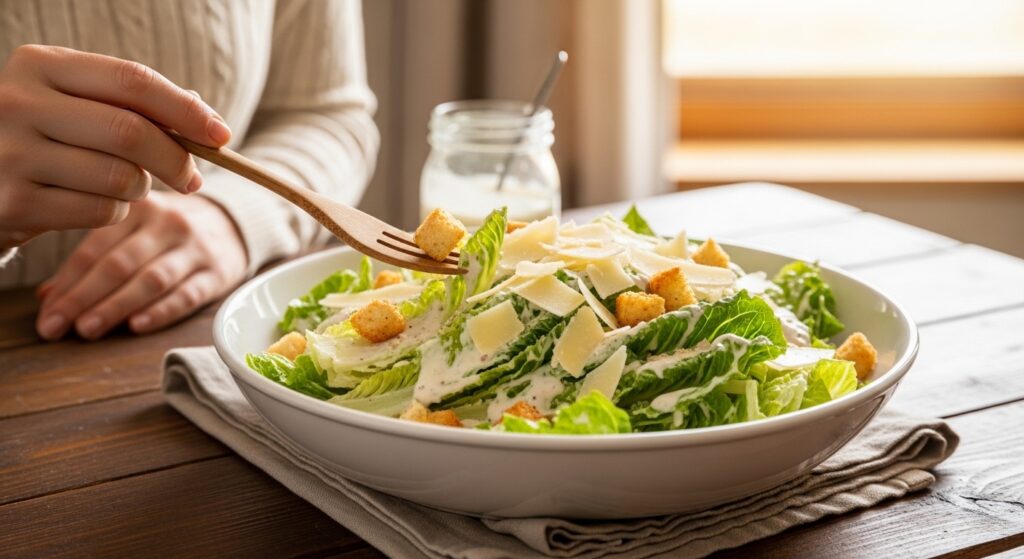
Toss it with crisp romaine, homemade croutons, and extra Parmesan for a classic Caesar salad that outperforms any restaurant version. Drizzle it over grilled chicken — the garlicky richness works like a sauce, not just a dressing. For drinks, a cold sparkling water with lemon or a crisp white wine balances the bold, savoury flavours perfectly.
Storage & Reheating Instructions
Store in a sealed glass jar in the refrigerator for up to 7 days. Glass keeps the flavour cleaner than plastic — avoid metal containers, which react with the lemon juice and leave a metallic aftertaste. This dressing doesn’t freeze well — the emulsion breaks on thawing, leaving it oily. Here’s the hack nobody mentions: press a piece of cling film directly onto the surface of the dressing before sealing the jar — it prevents oxidation and keeps the colour bright and fresh for the full week.
Nutrition Facts (per serving)
| Calories | 180 |
| Protein | 3 g |
| Carbohydrates | 2 g |
| Fats | 18 g |
| Fiber | 0 g |
| Sodium | 310 mg |
| Key Vitamins/Minerals | Vitamin K, Calcium, Iron |
FAQs
Can I make Caesar salad dressing without anchovies? Yes — replace anchovies with 1 teaspoon of white miso paste or 1 teaspoon of finely minced capers. Both deliver a similar briny, umami depth without any fish flavour. Most people can’t tell the difference, especially once the dressing is tossed with romaine and Parmesan.
Why does my homemade Caesar dressing taste bitter? Bitterness usually comes from using 100% extra virgin olive oil, which turns sharp when whisked aggressively. Blend it with a neutral oil like avocado or canola — roughly 60/40 — and the bitterness disappears completely while the richness stays intact.
Is it safe to use raw egg yolk in Caesar dressing? Raw egg yolk is safe for most healthy adults when using fresh, high-quality eggs. If you’re concerned, use pasteurized eggs — they behave identically in the emulsion. The acid from lemon juice also creates a slightly hostile environment for bacteria, adding an extra layer of safety.
How do I fix Caesar dressing that’s too thin? Whisk in an extra egg yolk — it re-emulsifies the dressing and thickens it almost instantly. Alternatively, add a teaspoon of mayonnaise and whisk hard. Both methods work within 30 seconds and restore the creamy, coating consistency the dressing should have.
Can I make Caesar dressing ahead of time? Absolutely — it actually improves after 24 hours in the fridge. The garlic mellows slightly, the lemon integrates, and the overall flavour becomes more cohesive and rounded. Make it the night before for the best possible result.
Conclusion
You wanted real Caesar dressing, not a watery imitation. This delivers thickness, bold garlic, and intense savor in every bite.
Your turn: whisk, taste, and adjust the lemon. Did you go vegan or extra spicy? Tell me how it turned out—or share with anyone stuck on bottled dressing.